

Both sea moss and spirulina have become wellness staples for women navigating the forties and fifties, yet most guides treat them as interchangeable superfoods with equally magical powers. They are not. Each works through different biological mechanisms, carries different safety profiles, and suits different health priorities. If you are managing energy dips, digestive sluggishness, or the wider hormonal shifts of perimenopause, understanding these distinctions is far more useful than following whichever trend is currently dominating social media.
Table of Contents
- What are sea moss and spirulina?
- Key benefits and evidence for energy, digestion, and wellness
- Safety, risks, and edge cases for women over 40
- Practical decision guide: choosing what fits your wellness goals
- A fresh perspective: what most guides get wrong about sea moss and spirulina
- Find trusted sea moss and spirulina for your wellness routine
- Frequently asked questions
Key Takeaways
| Point | Details |
|---|---|
| Distinct benefits | Sea moss focuses on digestion and fibre, while spirulina offers protein and antioxidant support. |
| Safety first | Sea moss presents iodine risks for thyroid health; spirulina is lower risk but product quality matters. |
| Evidence gaps | Neither supplement is clinically proven for menopause symptoms in humans as of 2026. |
| Personalised decisions | Choose based on your goals and medical history, not on broad supplement trends. |
| Moderation is key | Always start with small quantities and consult health professionals when in doubt. |
What are sea moss and spirulina?
Sea moss, often labelled as Irish moss or Chondrus crispus, is a red algae harvested from Atlantic coastlines, particularly around Ireland, the Caribbean, and parts of West Africa. It has been used in Caribbean and Irish folk traditions for generations as a nourishing tonic. Today you will find it sold as sea moss gels, dried flakes, powders, and capsules. The gel format is especially popular because it blends easily into smoothies, soups, or even skincare routines.
Spirulina is a blue-green microalgae, technically a cyanobacterium, cultivated mainly in warm freshwater lakes and managed farm facilities. It is harvested, dried, and sold primarily as a powder or in capsule form. The vibrant blue-green colour comes from phycocyanin, a pigment with antioxidant properties.
Both are marketed confidently towards women in their forties and fifties for energy, digestion, and hormonal balance. Here is what actually differentiates them at a foundational level:
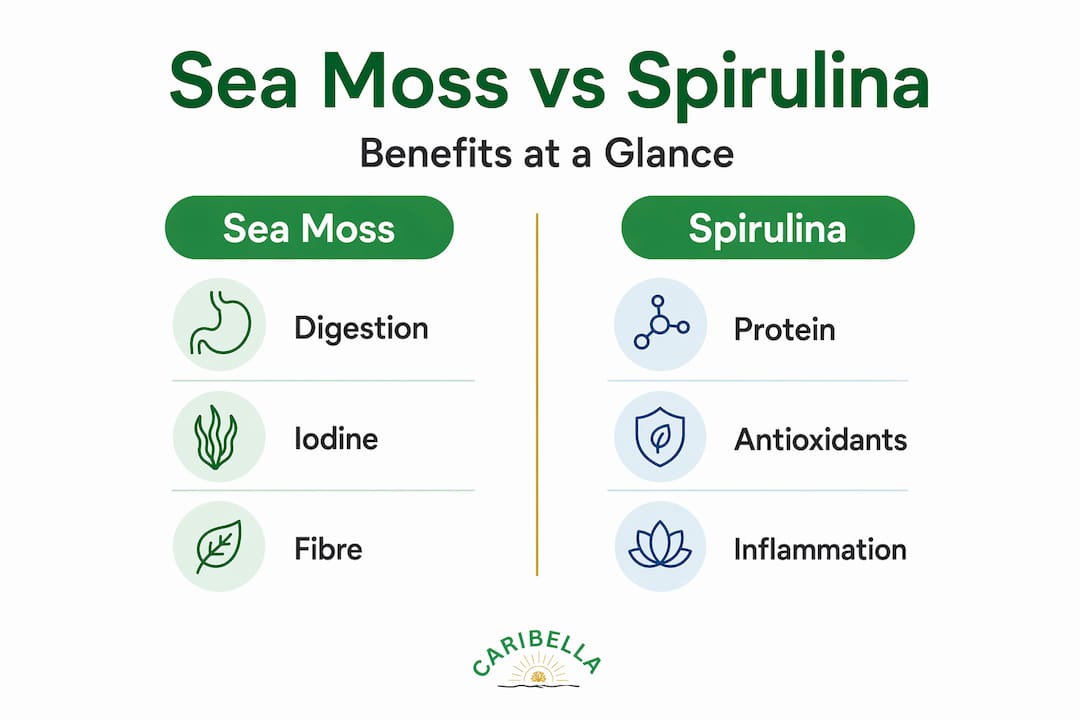
- Sea moss is primarily a fibre-rich prebiotic supplement that feeds beneficial gut bacteria and supports digestive regularity.
- Spirulina is nutrient-dense via protein and antioxidants, particularly phycocyanin, making it more relevant to oxidative stress and cellular nourishment.
- Sea moss contains notable quantities of iodine, a trace mineral that is critical but risky in excess.
- Spirulina is relatively low in iodine and carries a different risk profile, mainly around product purity.
- Sea moss is often positioned for gut and thyroid support; spirulina is frequently cited for inflammation, fatigue, and body composition.
It is worth reading about common sea moss myths for women before committing to either supplement, because marketing often overstates the evidence significantly.
Pro Tip: Always check the ingredient label and the sourcing information. Wildcrafted or certified organic products from traceable suppliers will generally be more consistent in nutrient content than cheaply sourced bulk powders.
Key benefits and evidence for energy, digestion, and wellness
Now that you know what these supplements are, let us compare their benefits and limitations based on current research.
Sea moss works primarily through its prebiotic fibre content. A well-functioning gut microbiome is increasingly linked to energy regulation, immune response, and even mood. Sea moss fibre acts as a prebiotic, feeding the beneficial bacteria that help keep your digestive system efficient. For women experiencing sluggish digestion or bloating during perimenopause, this mechanism is directly relevant. The iodine content in sea moss also supports thyroid function, and since the thyroid regulates metabolism, there is a plausible pathway from sea moss supplementation to improved energy levels. For more detail, see how sea moss supports energy and digestion in practice.
Spirulina takes a different route. Spirulina human trials focus on inflammation, sleep, and body composition rather than directly on gut regularity or thyroid support. Its protein content is notably high for a plant-based source, around 55 to 70 percent by dry weight, making it attractive for women who want to maintain muscle mass and metabolic rate as oestrogen levels decline.
A note on menopause specifically: Neither supplement has robust clinical evidence as a direct menopause symptom treatment. Spirulina shows some biological plausibility for supporting ovarian health in animal models, which is genuinely interesting, but those findings have not yet translated into controlled human trials for menopausal symptom relief. The same caveat applies to sea moss and its possible benefits for women’s hormonal health. The science is promising but preliminary.
Here is a summary of the key mechanisms worth understanding:
- Prebiotic fibre (sea moss): Feeds gut bacteria, supports bowel regularity, and may reduce bloating.
- Iodine (sea moss): Supports thyroid hormone production, which regulates metabolism and energy.
- Phycocyanin (spirulina): Acts as an antioxidant, helping reduce cellular oxidative stress linked to fatigue.
- Protein (spirulina): Supports muscle maintenance and satiety, particularly useful when appetite regulation changes in menopause.
- Anti-inflammatory compounds (spirulina): May help reduce chronic low-grade inflammation, which tends to increase after forty.
| Feature | Sea moss | Spirulina |
|---|---|---|
| Primary mechanism | Prebiotic fibre, iodine | Protein, antioxidants |
| Gut health evidence | Moderate, via fibre | Limited direct evidence |
| Energy pathway | Thyroid/metabolism support | Reduces oxidative fatigue |
| Menopause research | Minimal human data | Animal models only |
| Iodine content | High and variable | Very low |
| Protein content | Low | Very high |
| Typical form | Gel, capsules, powder | Capsules, powder |
Safety, risks, and edge cases for women over 40
Benefit claims often overlook safety, so it is critical to understand the practical risks and how they differ by supplement choice.
Sea moss and iodine risk is the single most important consideration for this age group. Sea moss iodine content is the dominant risk variable, and caution is firmly advised if you have any existing thyroid condition, including hypothyroidism, hyperthyroidism, or Hashimoto’s disease. The problem is that iodine content in sea moss varies enormously depending on where it was harvested and how it was processed. A serving that is perfectly safe from one batch may deliver excessive iodine from another. Women over forty are statistically more likely to have thyroid irregularities, many of which go undiagnosed, which makes this a particularly relevant concern.
Carrageenan and digestive sensitivity is a secondary issue. Some sea moss products contain or are processed alongside carrageenan, a derived compound also sourced from red algae. Carrageenan-related gut issues can worsen symptoms for women with irritable bowel syndrome or inflammatory bowel disease. If you already have a sensitive gut, read the label carefully and look specifically for carrageenan-free formulations.
“The quality and sourcing of sea moss products varies dramatically. A broad iodine range means that what is safe in one serving could be excessive in another. Women with thyroid concerns should always consult their GP before starting sea moss.”
Spirulina’s risk profile is distinct. It carries far lower iodine risk, which makes it a simpler choice for women with thyroid sensitivities. However, the primary concern with spirulina is product purity. Poorly controlled cultivation environments can lead to contamination with toxic cyanobacteria or heavy metals. This is not a reason to avoid spirulina entirely, but it is a strong reason to buy from certified, quality-tested suppliers. See practical sea moss wellness tips for guidance on applying similar quality checks across algae-based supplements.
| Risk factor | Sea moss | Spirulina |
|---|---|---|
| Iodine excess | High risk, variable content | Negligible |
| Thyroid interaction | Significant caution needed | Low concern |
| Carrageenan sensitivity | Possible, check labelling | Not applicable |
| Heavy metal contamination | Low if wildcrafted cleanly | Possible if poorly sourced |
| Drug interactions | Anticoagulants, thyroid meds | Immunosuppressants (rare) |
| Who should use caution | Thyroid conditions, IBS, IBD | Autoimmune disease, pregnancy |
For a fuller picture of who should and should not use sea moss, the risks of Irish moss for women over 40 article covers these scenarios in depth.
Pro Tip: Always begin with a small amount, such as one teaspoon of gel or a single capsule daily, and observe how your body responds over two to three weeks before increasing the dose. This is especially important if you are on any thyroid medication, as both supplements can interact with how your thyroid processes hormones.
Practical decision guide: choosing what fits your wellness goals
With safety and mechanism clear, let us turn the science into daily choices for your own situation.
The truth is that the “better” supplement depends almost entirely on what you are trying to address. Women over forty are not a monolith. Your needs, sensitivities, and baseline health will determine which option makes more sense to try first.
Choose sea moss if:
- Your primary concern is gut health, bloating, or irregular digestion.
- You are looking for prebiotic support and enjoy the versatility of a gel format.
- Your thyroid function has been checked recently and is normal.
- You want a supplement rooted in whole-food nutrition with a long traditional use history.
- You are interested in wildcrafted sea moss and appreciate transparent sourcing.
Choose spirulina if:
- Your priority is boosting protein intake from a plant-based source without dairy or meat.
- You are managing fatigue linked to inflammation rather than digestive sluggishness.
- You have a thyroid condition and cannot tolerate variable iodine intake.
- You want antioxidant support as part of a broader anti-ageing or energy maintenance strategy.
- You prefer capsules or powder with predictable, measured doses.
How to evaluate any product before you commit:
- Check for third-party testing. Look for supplements that carry independent quality certification, such as Informed Sport or organic body approvals.
- Read the full ingredient list. Look for additives, fillers, and the presence of carrageenan if you are choosing sea moss.
- Verify the source and growing region. Wildcrafted sea moss from the Caribbean or Atlantic coastlines is generally preferable to farm-raised options with unclear origins.
- Start with a trial dose. Spend two weeks on a smaller amount before committing to a daily full serving.
- Track your response. Note changes in energy, digestion, and any side effects. This makes it easier to assess whether the supplement is actually doing anything for you.
For sea moss and joint health, the mineral content, particularly its natural collagen-supporting compounds, makes it worth considering alongside its gut-focused benefits.
Practical guidance for UK women 40+ suggests a simple framework: if your main goal is gut regularity and prebiotic support, sea moss aligns more directly with that mechanism; if you are focused on protein and antioxidant nutrition with fewer iodine concerns, spirulina is often the simpler starting point.
Pro Tip: Review the supplier’s transparency. Reputable brands will publish where their sea moss was harvested, what testing was done, and the iodine range per serving. If that information is not available, that is a clear signal to shop elsewhere.
A fresh perspective: what most guides get wrong about sea moss and spirulina
Here is the uncomfortable reality: the wellness supplement industry runs on trend cycles, and both sea moss and spirulina have benefited enormously from social media amplification rather than clinical evidence. Most guides you find online, including many branded comparisons, are designed to push you towards a purchase rather than help you make a genuinely informed decision.
Brand-driven supplement comparisons frequently imply a clear winner, often whoever sponsors the content. Yet authoritative health guidance is far more conservative, consistently emphasising moderation, individual variability, and the foundational importance of diet and lifestyle above any single supplement.
The concept of “supplement fatigue” is real. When women are navigating perimenopause, they are often exposed to an overwhelming volume of wellness content suggesting that the right powder or capsule will resolve their symptoms. This is not only misleading but can be genuinely counterproductive if it leads to neglecting the basics: sleep quality, dietary variety, movement, and stress management.
Sea moss and spirulina can both play a supportive role. They are not magic. What matters far more is the quality of the product, the appropriateness for your specific health profile, and the consistency of use within a balanced diet. Reading about sea moss minerals for women is useful, but only if you pair that knowledge with scepticism about exaggerated claims.
The most valuable thing you can do is become a discerning consumer. Demand ingredient transparency, question dramatic benefit claims, and treat supplements as exactly what they are: additions to a healthy lifestyle, not replacements for one.
Find trusted sea moss and spirulina for your wellness routine
Understanding the evidence is only part of the picture. Finding products you can actually trust is the other half.
At Caribella, we take sourcing seriously because we know how much it matters for women who are making thoughtful choices about their health. Our sea moss gels are made from carefully selected wildcrafted sea moss, crafted with full ingredient transparency. If spirulina feels like the right fit for your goals, our organic spirulina capsules are formulated to consistent quality standards. For those who want to try both and build a balanced plant-based routine, our wellness bundles offer a curated starting point, without the guesswork. Every product we offer is designed to support energy, digestion, and overall wellbeing with the kind of care you deserve.
Frequently asked questions
Is sea moss or spirulina better for menopause symptoms?
Neither supplement is a proven menopause treatment. Spirulina shows some biological plausibility for supporting ovarian health in animal models, but there is currently no direct clinical evidence for symptom relief in menopausal women.
Does sea moss pose any risks if I have thyroid disease?
Yes, sea moss contains variable iodine that can worsen thyroid conditions, so anyone with hypothyroidism, hyperthyroidism, or Hashimoto’s disease should speak with their GP before using it.
Is spirulina safe for daily use?
Spirulina is generally considered safe in moderate amounts and carries far lower iodine risk than sea moss, though choosing a certified, purity-tested product is essential to avoid contamination risks.
Can sea moss worsen digestive issues?
Yes, particularly if the product contains carrageenan. Carrageenan-related gut issues are a known concern for women with IBS or inflammatory bowel disease, so always check the label and opt for carrageenan-free sea moss.
What is the safest way to try sea moss or spirulina?
Start with a small daily dose, check for any potential interactions with existing medications, and buy from a supplier who publishes quality testing data. If you have any ongoing health conditions, consult your GP before starting either supplement.