

Irish moss is everywhere right now. Wellness influencers call it a menopause superfood, health shops stock it in every form imaginable, and your social media feed probably features someone blending it into a smoothie. But is the hype justified? For women over 40 navigating perimenopause or menopause, sorting fact from fiction matters enormously. The last thing you need is to invest time and money in something that doesn’t deliver, or worse, causes harm. This guide cuts through the noise with honest, evidence-based answers about what Irish moss actually does, what it doesn’t do, and how to use it safely.
Table of Contents
- What is Irish moss and why is it trending?
- Nutritional profile: what’s in Irish moss?
- How can Irish moss support women’s health during menopause?
- Irish moss risks and how to use it safely
- A closer look: why balance and evidence matter most
- Discover high-quality Irish moss and women’s wellness support
- Frequently asked questions
Key Takeaways
| Point | Details |
|---|---|
| Rich in minerals | Irish moss provides useful levels of iodine, iron, and magnesium for women over 40. |
| Potential health support | Its fibre, antioxidants, and nutrients may benefit digestion and cell health, but evidence for menopause is limited. |
| Risks with excess use | Too much Irish moss can harm the thyroid and carry heavy metal dangers, so quality matters. |
| Always prioritise safety | Choose lab-tested, organic Irish moss and consult your doctor before use if you have medical conditions or take medication. |
What is Irish moss and why is it trending?
Irish moss, known scientifically as Chondrus crispus, is a red seaweed that grows along the rocky Atlantic coastlines of Ireland, the UK, and North America. It has been used for centuries in Irish and Caribbean cooking, primarily as a natural thickener. The gel it produces when soaked and blended forms the base of carrageenan, a widely used food additive. As a red seaweed harvested chiefly for its carrageenan and mineral content, it has a long history as both food and folk remedy.
So why is it suddenly everywhere in women’s wellness circles? A few things converged at once. Social media, particularly TikTok and Instagram, amplified Caribbean wellness traditions that had long championed sea moss as a tonic for energy and vitality. At the same time, women over 40 began searching more actively for natural alternatives to support hormonal changes, and Irish moss ticked several appealing boxes: plant-based, mineral-rich, and rooted in tradition.
The key nutrients driving the buzz include:
- Iodine, which supports thyroid function and metabolism
- Iron, important for energy and often depleted in women
- Calcium and magnesium, both vital for bone and nerve health
- Potassium, which supports heart function and fluid balance
- Zinc, which plays a role in immune function and skin health
Here is a quick overview of how Irish moss is typically consumed:
| Form | Common use | Notes |
|---|---|---|
| Gel | Added to smoothies, soups, teas | Most popular; easy to dose |
| Dried/raw | Soaked and blended at home | More economical; requires preparation |
| Capsules/powder | Daily supplement | Convenient; check dosage carefully |
| Herbal tea blends | Wellness drinks | Often combined with other botanicals |
The trend is real, but so is the need for scrutiny. Popularity does not equal proof.
Nutritional profile: what’s in Irish moss?
Understanding what Irish moss actually delivers nutritionally helps you set realistic expectations. A typical 10g serving is not going to transform your health overnight, but it does offer a genuine, if modest, mineral contribution.
Irish moss is nutrient-dense, supplying iodine, calcium, magnesium, iron, potassium, zinc, vitamin C, and B vitamins in varying amounts. The amounts per serving are meaningful rather than dramatic. For example, a 10g serving provides roughly 11% of your daily iron needs and around 3.4% of your magnesium requirement. For women over 40, where iron and magnesium can quietly dip, these contributions add up over time.
| Nutrient | Amount per 10g | % Daily value (approx.) | Why it matters for women over 40 |
|---|---|---|---|
| Iodine | 47mcg | 31% | Thyroid and metabolic function |
| Iron | 2mg | 11% | Energy, reduces fatigue |
| Calcium | 72mg | 7% | Bone density support |
| Magnesium | 14mg | 3.4% | Nerve function, sleep quality |
| Potassium | 157mg | 3.3% | Heart health, fluid balance |
Irish moss also provides soluble fibre and antioxidants. The fibre feeds beneficial gut bacteria, and the antioxidants help counter oxidative stress, both of which become more relevant as you move through your forties and beyond.
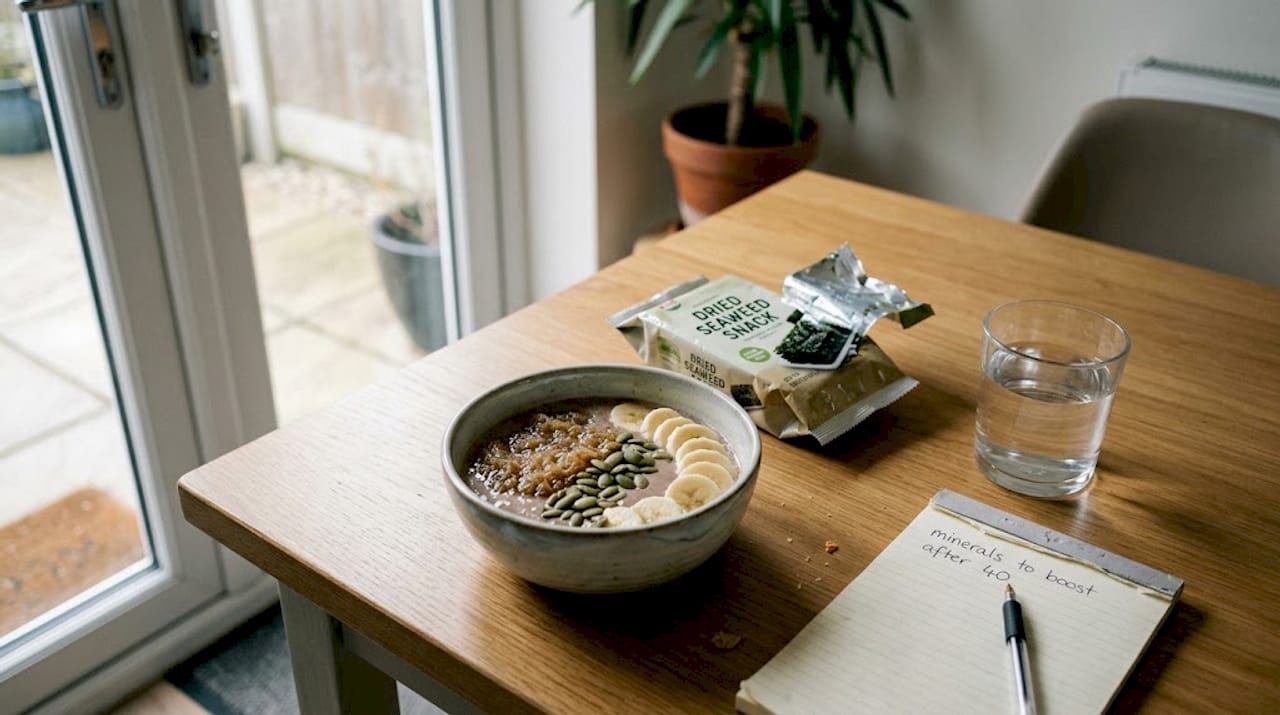
Pro Tip: Irish moss works best as a complement to a varied diet, not a replacement for whole foods. Think of it as a useful mineral top-up, not a shortcut.
What it is not is a complete nutritional solution. The amounts of most vitamins are too small to rely on exclusively. A handful of leafy greens still beats a tablespoon of gel for calcium and magnesium. But as part of a broader approach to nutrition, Irish moss earns its place.
How can Irish moss support women’s health during menopause?
This is the question most women over 40 are really asking. Does Irish moss actually help with the physical and emotional shifts of perimenopause and menopause? Here is what the evidence genuinely supports.
The most credible benefits come down to three mechanisms. First, gut support. Irish moss contains prebiotic fibre that feeds gut bacteria, helps digestion, and may ease the bloating and irregularity that many women experience during hormonal transitions. Second, thyroid and metabolic support via iodine, though this is a double-edged point we will return to shortly. Third, antioxidant activity that helps manage cellular stress, which accelerates with age.
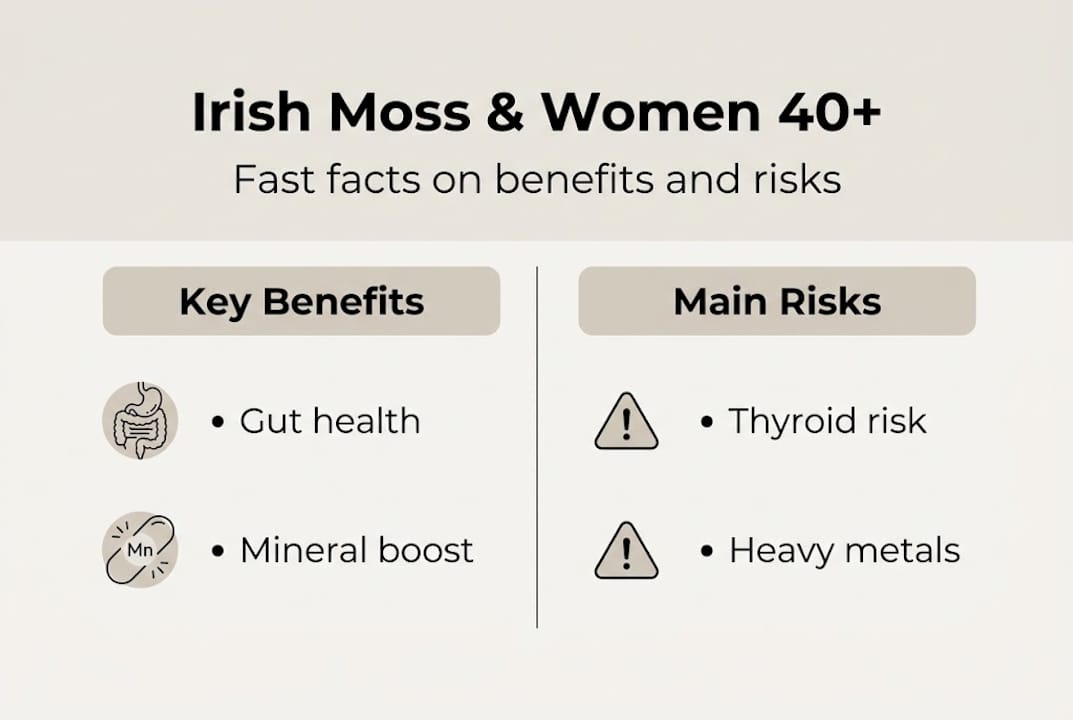
Here is an honest comparison of common claims versus what the evidence actually shows:
| Claim | Evidence level | Reality |
|---|---|---|
| Supports gut health | Moderate | Prebiotic fibre is well-supported |
| Balances hormones | Low | No direct hormonal action proven |
| Boosts energy | Indirect | Iron and iodine may help if deficient |
| Reduces hot flushes | Very low | No clinical trials support this |
| Supports thyroid | Moderate (with caution) | Iodine helps, but excess is risky |
For practical use, here is a sensible approach:
- Start with a small daily amount (1 tablespoon of gel) and observe how your body responds.
- Combine it with other evidence-based supports, such as hormone balancing support or a menopause wellness tea.
- Track any changes in digestion, energy, or sleep over four to six weeks.
- Discuss with your GP or menopause specialist before making it a regular habit.
- Do not expect it to replace medical treatment if your symptoms are severe.
Pro Tip: Pair Irish moss with magnesium-rich foods like pumpkin seeds and dark leafy greens. The combination supports the nerve and muscle function that can be disrupted during menopause.
The honest summary: Irish moss offers genuine nutritional support, but no large menopause-specific human trials exist. Its value is real but modest.
Irish moss risks and how to use it safely
Benefits only tell half the story. For women over 40 in the UK, understanding the risks is just as important as knowing the potential upsides.
The biggest concern is iodine overload. Irish moss is naturally high in iodine, and too much iodine can actually disrupt thyroid function rather than support it. Signs of excess iodine include unexplained fatigue, weight changes, and heart palpitations. If you already have a thyroid condition, this is a serious consideration.
Additional risks to be aware of:
- Heavy metal contamination: Seaweed absorbs minerals from its environment, including potentially harmful ones like lead and arsenic. Always choose lab-tested sources.
- Blood-thinning effects: Irish moss may affect blood clotting, which matters if you take anticoagulant medication.
- Digestive sensitivity: Some women experience bloating or loose stools when they introduce Irish moss too quickly.
- Interactions with medication: Thyroid drugs, blood thinners, and some blood pressure medications may all interact.
Always consult your GP or a qualified menopause specialist before adding Irish moss to your routine, particularly if you are managing a health condition or taking prescription medication.
For safe use, start with 1 to 2 tablespoons of gel (roughly 4 to 10g) per day and build up gradually. When buying dried or raw Irish moss, look for lab-tested Irish moss from verified UK suppliers, or consider purple sea moss varieties that are sourced and tested responsibly. Organic or wild-harvested options with third-party testing are your safest bet.
Pro Tip: If you are new to Irish moss, try it three to four times a week rather than daily for the first month. This lets your body adjust and makes it easier to spot any reactions.
Avoid Irish moss entirely if you are pregnant, breastfeeding, or have been diagnosed with hyperthyroidism or hypothyroidism without first getting medical clearance.
A closer look: why balance and evidence matter most
Here is something you will not often read on a wellness brand’s Instagram page: Irish moss is not a menopause miracle. It never was. The enthusiasm around it is understandable, because women over 40 are often underserved by conventional medicine and are right to look for natural, supportive options. But the gap between “this has real nutritional value” and “this will fix your menopause” is enormous.
What we find genuinely valuable about Irish moss is its place within a broader, consistent approach to nutrition. The minerals it provides are real. The gut support is plausible. The antioxidant contribution is meaningful. But none of these benefits switch on overnight, and none of them work in isolation.
The women who benefit most from Irish moss are those who treat it as one useful tool among many, not the answer to everything. They eat varied diets, stay active, manage stress, sleep well, and use supplements thoughtfully. Irish moss fits neatly into that picture. It does not replace it.
Beware of any source, including wellness accounts with millions of followers, that promises dramatic hormonal shifts from a tablespoon of seaweed gel. The science simply does not support it. What the science does support is steady, evidence-based nutrition, and Irish moss can be a small but genuine part of that.
Discover high-quality Irish moss and women’s wellness support
If you are ready to try Irish moss with confidence, the quality of your source matters more than almost anything else. Poorly sourced seaweed carries real risks, while well-tested, responsibly harvested Irish moss can be a genuinely useful addition to your wellness routine.
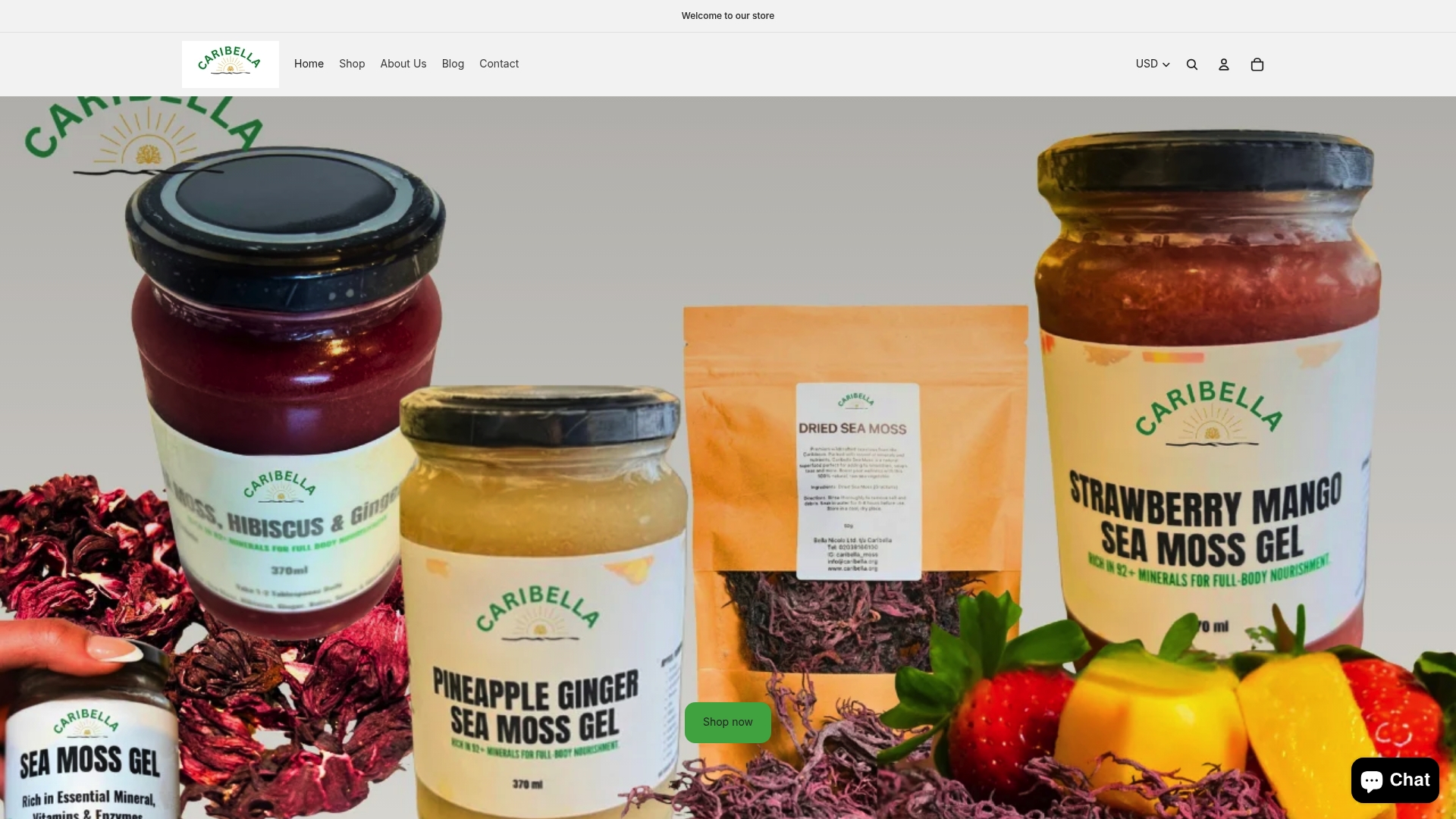
At Caribella, we source our Sea Moss Gels and dried Irish moss with care, drawing on Caribbean wellness traditions and modern quality standards. Our Women’s Wellness Tea blends botanicals chosen specifically with women’s health in mind, and our Women’s Wellness Capsules offer convenient, consistent support. Every product is made with natural ingredients and designed to fit into real life. Your wellbeing deserves both quality and honesty.
Frequently asked questions
Is Irish moss safe for women with thyroid issues?
Irish moss contains significant amounts of iodine, which can worsen both underactive and overactive thyroid conditions. Avoid it unless your doctor has specifically advised otherwise.
How should I take Irish moss for menopause support?
Begin with 1 to 2 tablespoons of gel or 500 to 2000mg of powder daily, as recommended dosages suggest, and monitor how you feel over several weeks alongside a balanced diet.
Are there side effects to Irish moss?
Some women experience digestive discomfort, and there are risks of heavy metals and potential blood-thinning effects. Buying from lab-tested, reputable UK suppliers significantly reduces these risks.
Can I use Irish moss alongside HRT or other medication?
Always speak to your GP before combining Irish moss with hormone replacement therapy, blood thinners, or thyroid medication, as interactions are possible.
Is there clinical proof Irish moss helps menopause?
Currently, no menopause-specific trials exist for Irish moss, though its nutritional profile supports general health in ways that may benefit women during this life stage.