

Sea moss has exploded across social media, with influencers promising everything from hot flush relief to dramatic weight loss. If you’re in your 40s or 50s and navigating perimenopause or menopause, those promises are understandably appealing. But benefits require more human research before sea moss can be called a genuine remedy for menopause symptoms. This article cuts through the noise, separates social media hype from honest science, and helps you make informed decisions about your own wellness.
Table of Contents
- Sea moss in context: superfood or overhyped?
- Myth 1: Sea moss cures menopause symptoms
- Myth 2: Sea moss is risk-free and always healthy
- Myth 3: Sea moss guarantees weight loss and better health
- How to use sea moss safely and wisely after 40
- Our perspective: why critical thinking beats hype every time
- Explore trusted sea moss and wellness options
- Frequently asked questions
Key Takeaways
| Point | Details |
|---|---|
| No menopause cure | Sea moss is not proven to treat menopause symptoms but may offer nutritional support. |
| Check for safety | Always choose tested sea moss with certificates of analysis to avoid contaminants and excess iodine. |
| Moderation matters | Start with small amounts and consult your GP, especially if you have thyroid issues. |
| Beware miracle claims | Weight loss and sweeping health promises are not backed by reliable studies. |
| Whole food preferred | Opt for gel or whole sea moss rather than concentrated pills for optimal safety. |
Sea moss in context: superfood or overhyped?
Sea moss, also known as Irish moss or Chondrus crispus, is a type of red algae that grows along Atlantic coastlines, including parts of Ireland, the Caribbean, and the north-eastern coast of North America. It has been used in Caribbean and Irish folk traditions for centuries, typically as a thickening agent in foods and as a general tonic. Today, it shows up in gels, capsules, smoothies, and skincare products, marketed heavily at women seeking natural wellness support.
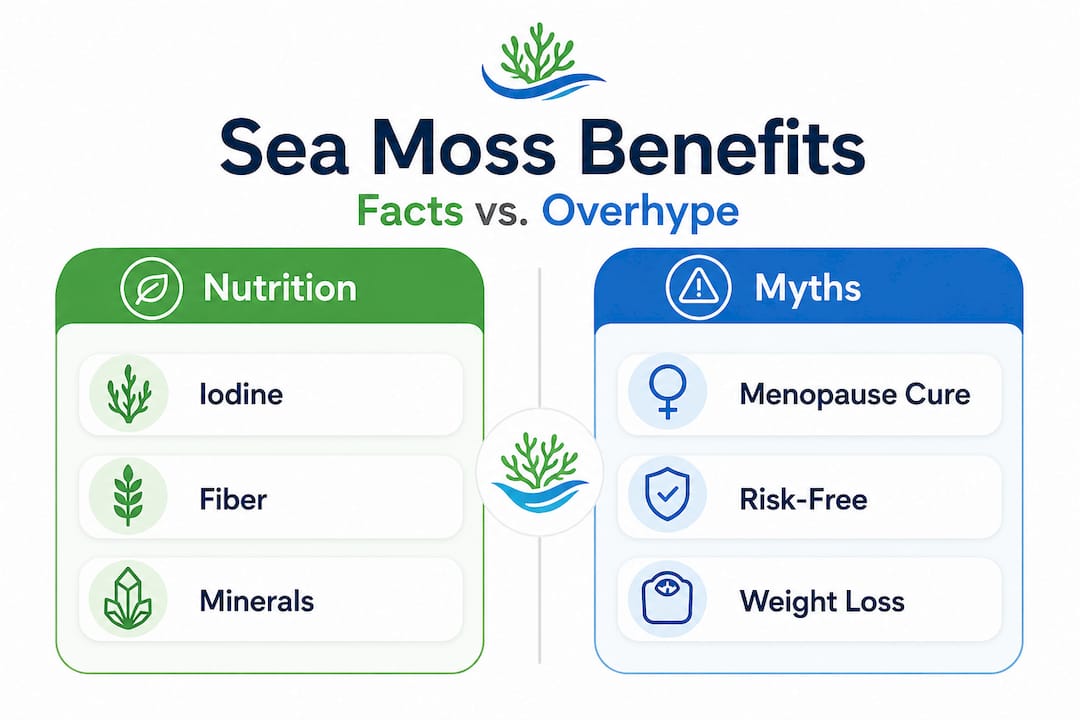
The “superfood” label gets applied because sea moss contains a range of nutrients that genuinely matter for women over 40. These include:
- Iodine, which supports thyroid function
- Potassium, important for heart health and blood pressure
- Magnesium, which may support sleep and muscle relaxation
- Fibre, specifically a gel-forming type called carrageenan
- Iron, relevant for energy levels, particularly in perimenopause
- B vitamins, which contribute to nervous system function
These nutrients are real and meaningful. The problem is the leap from “contains useful nutrients” to “cures menopause symptoms.” As the Children’s Hospital of Philadelphia notes, health claims for sea moss relating to gut health, immunity, and skin largely come from seaweed studies or preclinical data, not specific, high-quality human trials on sea moss itself.
| Nutrient | Potential benefit for women 40+ | Evidence quality |
|---|---|---|
| Iodine | Thyroid support | Moderate (from seaweed studies) |
| Fibre | Digestive health, satiety | Good (general fibre research) |
| Magnesium | Sleep, mood, muscle function | Moderate |
| Iron | Energy, reducing fatigue | Moderate |
| Potassium | Blood pressure, heart health | Good (general research) |
Understanding sea moss nutrition in this context means you can appreciate what it genuinely offers without expecting miracles. If you’re curious about specific applications, exploring sea moss benefits for menopause with realistic expectations is a solid starting point.
Pro Tip: Think of sea moss as a nutrient-dense food, not a medicine. It can complement a balanced diet, but it works best alongside good sleep, regular movement, and whole food nutrition.
Myth 1: Sea moss cures menopause symptoms
This is the myth doing the most damage online. Search “sea moss menopause” and you’ll find countless posts and product pages claiming it balances hormones, eliminates hot flushes, lifts brain fog, and restores libido. It sounds exactly like what many women in perimenopause are desperately hoping to find.
The honest truth? No sea moss product is clinically proven to relieve menopause or perimenopause symptoms. The benefits associated with sea moss relate to its general nutritional profile, particularly fibre and minerals, not to any direct hormonal action or clinically demonstrated effect on oestrogen or progesterone levels.
“Promotional websites frequently overstate the evidence, framing minerals like magnesium and potassium as tools for ‘hormone balance’ without the clinical trials to support such claims. Medical sources consistently stress the lack of evidence, the need for moderation, and the real risks involved.” Sea moss safety and hype
Here is how the claims compare to the evidence:
| What promoters claim | What science actually shows |
|---|---|
| Balances hormones naturally | No evidence of hormonal action |
| Reduces hot flushes | No clinical trials to support this |
| Improves mood and cognitive function | General mineral support only |
| Restores energy and libido | Indirect, via iron and B vitamins |
| Supports bone density | Calcium content is modest; no trial data |
This does not mean sea moss is worthless during menopause. Adequate iodine supports thyroid function, which can become more unpredictable during perimenopause. Magnesium may support sleep quality. Iron is important if your periods are heavy before they stop. These are real, nutritional contributions. The issue is framing them as a “cure.”
Reading about Irish moss myths can help you spot the difference between honest nutritional support and exaggerated wellness claims before you spend your money.
Pro Tip: If a website promises sea moss will “balance your hormones,” treat that as a red flag. Look for brands that make honest, evidence-based statements about what their products can and cannot do.
Myth 2: Sea moss is risk-free and always healthy
The word “natural” carries a lot of unearned trust in wellness culture. Arsenic is natural. So is mercury. “Natural” tells you very little about safety, and sea moss is a useful case study in why that matters.
There are two primary concerns for women over 40 considering sea moss regularly.
Iodine overload and thyroid disruption
Sea moss is high in iodine. A small daily serving can deliver iodine levels that vary enormously depending on the harvest location, season, and processing method. Excessive iodine can actually suppress thyroid function rather than support it, a condition called hypothyroidism, which is already more common in perimenopausal women. If you have any history of thyroid issues, taking sea moss daily without medical guidance is genuinely risky.
The thyroid connection matters here more than most wellness articles acknowledge. Perimenopause itself can cause changes in thyroid function. Adding irregular doses of iodine to that mix without knowing your baseline levels is not something to do casually.
Heavy metal contamination
Sea moss grows in the ocean. It absorbs what the ocean contains, including pollutants. Sea moss can accumulate heavy metals such as arsenic, lead, and mercury from polluted waters, potentially causing kidney damage and other serious harm if consumed regularly from untested sources.
This is not a reason to avoid sea moss entirely, but it is an excellent reason to be selective about your source.
Key safety considerations:
- Choose products with a certificate of analysis (COA), which is a third-party lab test showing heavy metal and iodine levels
- Prefer whole food or gel forms over high-concentration capsules or extracts, as these tend to have lower contaminant concentrations
- Avoid products without clear sourcing information, particularly those harvested from unspecified waters
- Do not exceed suggested serving sizes, since more is not better with iodine
- Inform your GP if you have existing thyroid concerns or are on medication that affects thyroid function
Understanding wildcrafted sea moss and how sourcing affects safety is genuinely useful knowledge here. When choosing sea moss capsules specifically, the concentration issue becomes especially important. Learning to decode product labels by reading sea moss terminology properly saves you from expensive, potentially risky mistakes.
| Risk factor | Who it affects most | How to reduce risk |
|---|---|---|
| Excess iodine | Women with thyroid conditions | Check COA, limit portions |
| Heavy metals | Everyone, especially kidneys | Only buy third-party tested |
| Allergic reactions | Women with shellfish sensitivity | Start with a small amount |
| Drug interactions | Women on blood thinners | Consult GP before starting |
Pro Tip: Ask any sea moss supplier directly for their COA. A trustworthy brand will share it without hesitation. If they cannot or will not, shop elsewhere.
Myth 3: Sea moss guarantees weight loss and better health
This myth tends to show up alongside before-and-after photos and testimonials that are almost impossible to verify. The promise is that sea moss accelerates metabolism, helps you drop weight effortlessly, and delivers vibrant, glowing health.
The truth is far more straightforward and considerably less exciting. Sea moss does not guarantee weight loss. There is no robust clinical evidence demonstrating that sea moss directly causes fat loss in humans. What exists is reasonable evidence that fibre, particularly soluble fibre of the kind found in sea moss, can support satiety, meaning you may feel fuller for longer after eating it.
That is genuinely useful for women over 40, who often experience shifts in metabolism, appetite regulation, and body composition during perimenopause. Feeling fuller for longer can support healthier eating patterns. But that is a very different claim from “sea moss makes you lose weight.”
Here is a realistic breakdown of what sea moss fibre can and cannot do:
- Can: Help you feel more satisfied after smaller meals
- Can: Support digestive regularity and gut comfort
- Can: Contribute to a balanced, nutrient-dense diet
- Cannot: Directly burn fat or boost metabolism
- Cannot: Replace a calorie-appropriate, whole food eating pattern
- Cannot: Overcome a largely sedentary lifestyle or poor dietary habits
The broader “better health” claims follow a similar pattern. Minerals and fibre from sea moss can contribute positively to overall wellbeing when part of a genuinely balanced diet. They are not a shortcut, and they do not transform health on their own. If you’re interested in how sea moss fits into broader skin and energy after 40 conversations, contextualising it alongside other lifestyle factors gives a far more honest picture. Similarly, claims about sea moss for skin health need to be read with the same measured lens.
How to use sea moss safely and wisely after 40
Understanding the myths, the evidence, and the risks naturally leads to the practical question: how do you actually use sea moss safely if you choose to include it?
Here is a step-by-step approach that puts your safety first:
- Check for a certificate of analysis. Before buying anything, confirm the product has been tested by an independent laboratory for heavy metals (arsenic, lead, mercury) and iodine content. This is non-negotiable for safe use.
- Choose whole or gel forms over capsules and concentrates. Whole food and gel forms are generally safer because the fibre matrix slows absorption, lowers contaminant concentration per dose, and is easier for your body to process than isolated extracts.
- Start small. Begin with a teaspoon of gel daily rather than a full tablespoon. Give your body two to three weeks to adapt and watch for any reactions, including skin changes, digestive upset, or signs of thyroid disruption such as unusual fatigue, weight changes, or palpitations.
- Speak to your GP first if you have thyroid conditions, take blood-thinning medication, or are currently managing any hormonal health concerns. Sea moss is not appropriate for everyone, and a quick conversation with your doctor protects you.
- Set realistic expectations. Sea moss can be a genuinely useful addition to a balanced diet. Frame it as a mineral-rich food supplement, not a cure, and you’ll get the most honest value from it.
If you’d like to prepare it at home, learning how to make sea moss gel gives you full control over what goes into your body, from sourcing to preparation.
Pro Tip: Keep a simple daily log for the first month. Note your energy, digestion, sleep, and any unusual symptoms. This gives you real data about how sea moss is actually affecting you, rather than relying on how you think you should feel.
Our perspective: why critical thinking beats hype every time
We’ve seen how sea moss myths spread, and we’ll be honest with you: hope is a powerful engine. Women in perimenopause are often navigating enormous physical and emotional change, and the wellness industry knows that. When someone promises a simple, natural solution, it is deeply human to want it to be true.
At Caribella, we believe that the most respectful thing we can do is tell you the truth. Sea moss is a genuinely interesting, nutrient-dense food with a long history in Caribbean and Irish traditions. It is not a cure for menopause. It is not a guaranteed path to weight loss. It will not balance your hormones on its own. But used thoughtfully, with proper sourcing and realistic expectations, it can be a useful part of a broader wellness approach.
What we find more valuable than any single food or supplement is the habit of asking questions. Who is making this claim? What is the evidence? Who funded that study? Is this a whole food or a concentrated extract? These are not cynical questions. They are the questions that protect you from spending money on products that cannot deliver what they promise.
Real, lasting wellness after 40 comes from layered habits: adequate sleep, movement you enjoy, nourishing food, stress management, and honest conversations with your healthcare team. Sea moss can play a small, supportive role in that picture. For a grounded view of how supplements fit into this broader lifestyle approach, our practical herbal supplement guide offers sensible, evidence-aware guidance without the hype.
The wellness industry will always find a new miracle food. Your critical thinking is the one tool that never goes out of fashion.
Explore trusted sea moss and wellness options
If you’ve read this far, you’re exactly the kind of informed, thoughtful woman we built Caribella for. You’re not looking for miracles. You want quality, transparency, and products that actually support your wellbeing.
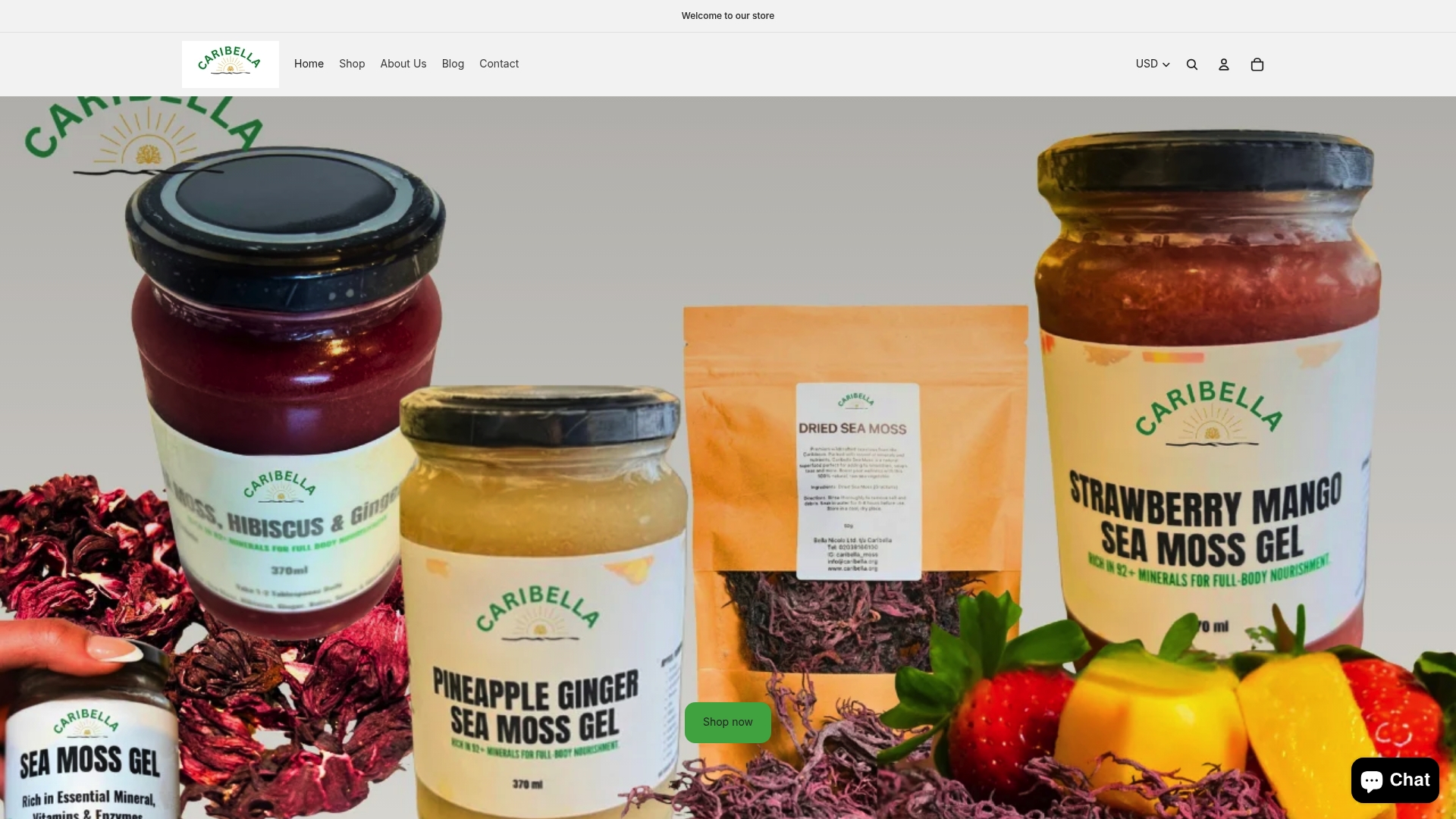
Our sea moss gels are made with carefully sourced, quality-tested sea moss and come in easy-to-use formats designed for real life. If capsules suit your routine better, our women’s wellness capsules are formulated with balanced, plant-based ingredients. And for a gentler daily ritual, our range of herbal teas draws on Caribbean herbal traditions to support calm, digestion, and overall wellbeing. Everything we make is designed to complement your lifestyle honestly, not replace the foundational habits that make the real difference.
Frequently asked questions
Is sea moss good for menopause symptoms?
Current research does not support sea moss as a proven remedy for menopause; it provides minerals and fibre but is not a treatment for symptoms. Think of it as a nutritional addition, not a hormonal solution.
Can sea moss harm your thyroid during perimenopause?
Yes, too much iodine from sea moss may worsen thyroid function, and excessive iodine can cause thyroid dysfunction, which is a particular concern during perimenopause when thyroid changes are already more common. Always check iodine levels in your product and consult your GP.
Does sea moss really help you lose weight?
There is no direct evidence that sea moss leads to weight loss; fibre may support satiety and digestive regularity, but this is very different from a fat-loss effect. Weight management requires a broader, consistent approach.
How can I check if my sea moss is safe?
Always ask for a certificate of analysis for heavy metals and iodine levels before purchasing. Reputable brands will provide this readily, and gel or whole food forms are generally a safer starting point than highly concentrated capsules.