

Herbal tea has a reputation for being the gentle, wholesome choice sitting quietly at the back of the cupboard. But here is the thing: not every herb-filled cup is as innocent as it looks. For women over 40 navigating perimenopause and menopause, the stakes of choosing the wrong blend, or relying too heavily on one, are higher than most people realise. This guide breaks down what herbal tea actually is, what the evidence really says about its role in hormonal wellbeing, and how to make smart, safe choices that genuinely support your health.
Table of Contents
- What is herbal tea? Definitions and varieties
- Herbal teas and menopause: Evidence, expectations, and safety
- How to choose herbal teas wisely: Safety tips for women 40+
- Simple ways to enjoy herbal tea for wellbeing
- Why ‘natural’ isn’t always simple: Our honest take for women over 40
- Discover herbal teas crafted for women’s wellbeing
- Frequently asked questions
Key Takeaways
| Point | Details |
|---|---|
| Herbal tea basics | Herbal tea is an infusion of plants, not true tea, and can contain a variety of active ingredients. |
| Menopause safety | Current NHS guidance does not recommend herbal teas for menopause due to unclear safety and effectiveness. |
| Mind your medicines | Herbal teas can interact with prescribed medicines, so consult a professional if unsure. |
| Enjoy with care | Use herbal teas as part of a balanced routine, focusing on enjoyment and wellbeing rather than cure. |
What is herbal tea? Definitions and varieties
Before we talk about benefits or risks, it helps to get clear on what herbal tea actually is, because the term covers far more ground than most people expect.
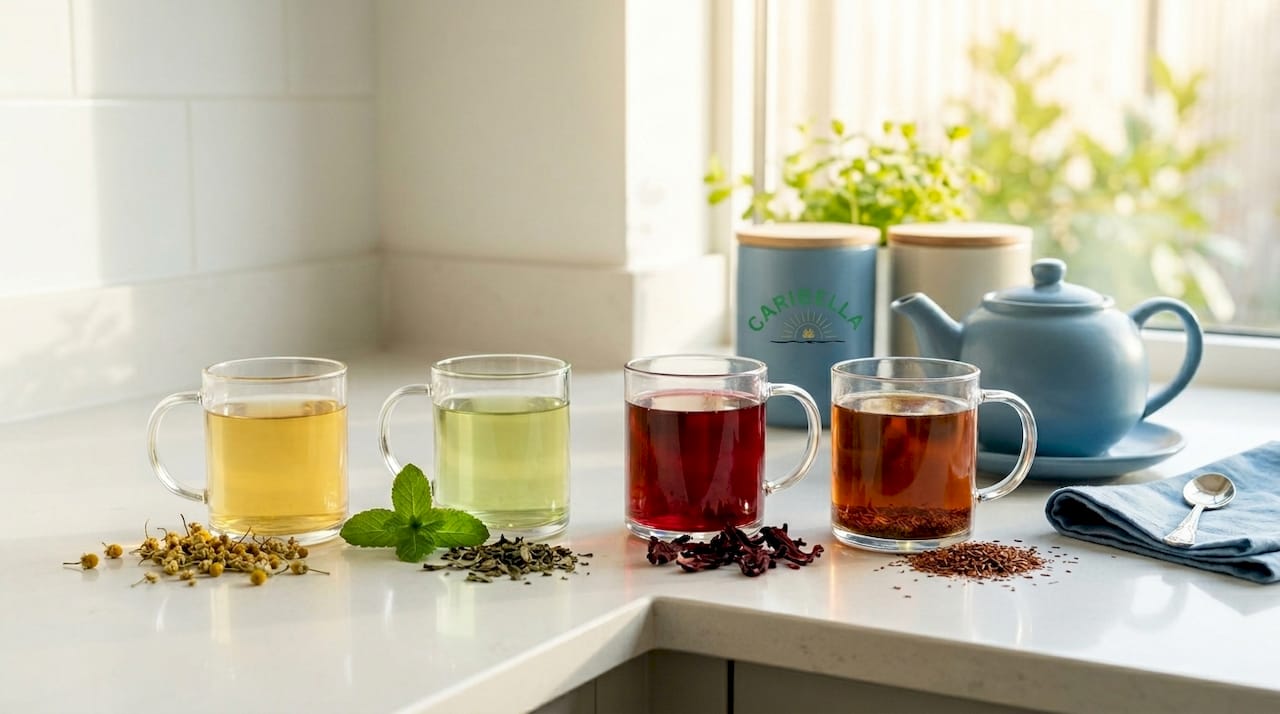
Technically speaking, herbal tea is defined as dried herbs intended to be made into a drink. That definition matters. It tells you immediately that herbal tea is not the same as “tea.” Real tea, whether green, black, or white, comes from the Camellia sinensis plant. Herbal teas are infusions made from a very different cast of characters: flowers, roots, seeds, spices, bark, and fruits, steeped in hot water. The word “tea” in herbal tea is more of a colloquial shorthand than a botanical fact.
This distinction is not just academic. It has practical consequences for what you expect from your cup and what it actually delivers.
Common herbal tea varieties and what they claim to do
| Herbal tea | Main ingredient | Common claim |
|---|---|---|
| Chamomile | Matricaria chamomilla | Relaxation, sleep support |
| Peppermint | Mentha piperita | Digestion, headache relief |
| Rooibos | Aspalathus linearis | Antioxidant support |
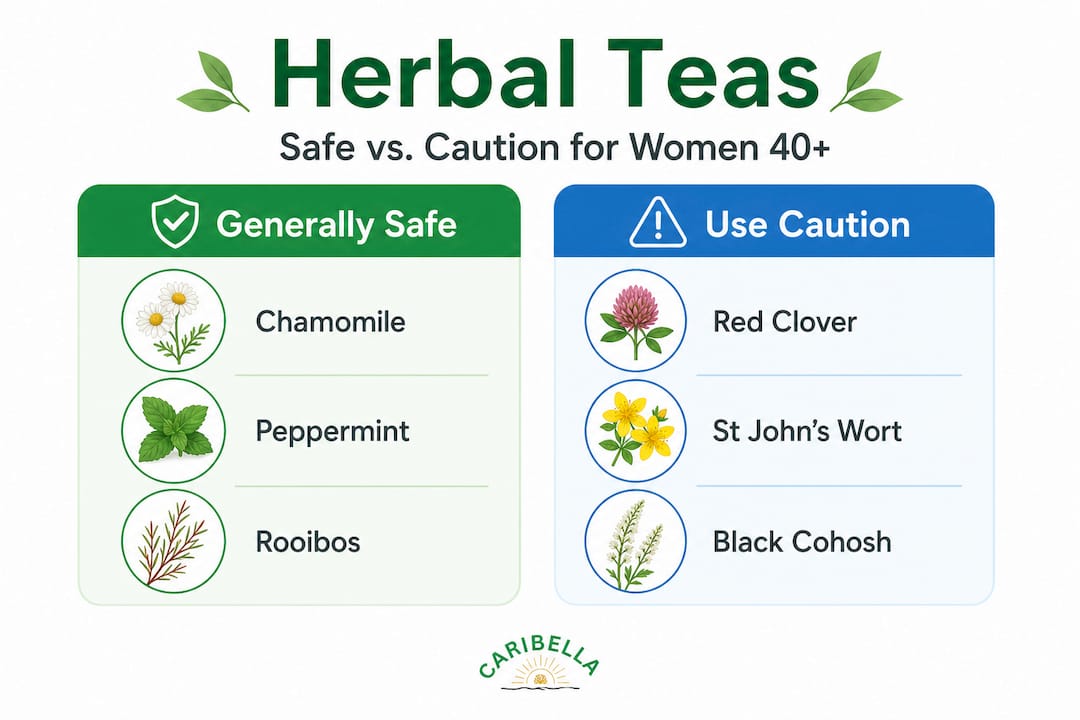
| Red clover | Trifolium pratense | Menopause symptom relief |
| Ginger | Zingiber officinale | Nausea, anti-inflammatory |
| Valerian root | Valeriana officinalis | Sleep and anxiety |
| Hibiscus | Hibiscus sabdariffa | Blood pressure, antioxidants |
Here is where it gets important: many herbal tea blends on the market today include far more than a single herb. You might pick up a “menopause blend” and find it contains red clover, black cohosh extract, liquorice root, and ashwagandha all in one bag. Each of those has its own pharmacological profile, meaning its own possible interactions, contraindications, and effects on your body.
“Not all herbal teas are created equal. A blend that works beautifully for your friend may not be right for you, particularly if you are taking prescription medication or managing an ongoing health condition.”
A few key facts worth knowing about herbal teas before you commit to a daily ritual:
- Not all are caffeine-free. Yerba maté, guarana, and some green tea blends marketed as herbal still contain significant caffeine.
- Some contain phytoestrogens. These are plant compounds that mimic oestrogen in the body, relevant for women with hormone-sensitive conditions.
- Quality varies enormously. Labelling in the UK is not always detailed enough to tell you the concentration of active compounds in a bag.
Exploring herbal tea benefits is a worthwhile first step, but pairing that knowledge with an understanding of risks gives you a far stronger foundation for choosing wisely.
Herbal teas and menopause: Evidence, expectations, and safety
Once you know what herbal tea is, the next question is obvious: can it actually help with the hot flushes, broken sleep, brain fog, and mood shifts that come with perimenopause and menopause? The honest answer is more complicated than most marketing suggests.
What the NHS says
The NHS does not recommend complementary approaches like herbal remedies for menopause or perimenopause symptoms, citing unclear evidence around both safety and effectiveness. This does not mean herbal teas are worthless. It means robust clinical evidence for their use as symptom-relief tools is still lacking, and that should inform your expectations.
Red clover is one of the most frequently discussed herbs for menopausal women because it contains isoflavones, a type of phytoestrogen. Some small studies have shown modest reductions in hot flush frequency. But the evidence base is inconsistent, and long-term safety data for women with a history of hormone-sensitive cancers is particularly thin. Black cohosh is another popular choice, but again, trial results are mixed and some safety concerns around liver function have been raised in isolated cases.
Quick comparison: popular menopause herbs
| Herb | Proposed benefit | Evidence strength | Key concern |
|---|---|---|---|
| Red clover | Reduces hot flushes | Weak to moderate | Phytoestrogen effects |
| Black cohosh | Hot flushes, mood | Mixed | Rare liver concerns |
| Valerian | Improved sleep | Limited | Sedation, drug interactions |
| Sage | Night sweats | Very limited | High doses can be toxic |
| Ashwagandha | Stress and energy | Emerging | Interactions with thyroid meds |
The NHS also notes that herbal medicines can be harmful if not used correctly. “Natural” does not mean free from side effects. Herbs are biologically active. They contain compounds that affect your body at a cellular level, sometimes in ways that interact with prescribed medications.
Stat to know: St John’s Wort, a herb frequently taken for low mood and sometimes included in “wellness” tea blends, is known to reduce the effectiveness of the contraceptive pill, blood thinners, antidepressants, and even some cancer treatments. It is a striking example of how a “natural” plant can have very real pharmacological consequences.
Pro Tip: Before adding any new herbal tea to your daily routine, especially one marketed for menopause or hormonal balance, bring the label or packaging to your pharmacist. They can flag any interactions with your current medications in minutes.
For a broader view of how herbal teas for menopause are being used alongside other approaches, it is worth looking at the full picture rather than relying on single-product claims. And if your main goal is tackling tiredness and fatigue, exploring menopause and energy support through a combination of lifestyle changes and carefully chosen herbal rituals can be more effective than any single remedy.
How to choose herbal teas wisely: Safety tips for women 40+
Armed with a clearer picture of the evidence, you can now make genuinely informed choices. Here is a practical approach to selecting and using herbal teas in a way that is both enjoyable and responsible.
-
Read the full ingredient list. Do not just glance at the front of the packet. Flip it over and look at every herb and botanical compound listed. If you do not recognise something, look it up or ask a pharmacist.
-
Check for quality markers. In the UK, look for products that carry the Traditional Herbal Registration (THR) mark if they make medicinal claims. This indicates the product has been assessed for quality and safety, even if not for clinical effectiveness.
-
Speak to your GP or pharmacist first. This is especially important if you take anticoagulants, antidepressants, thyroid medication, or immunosuppressants. Many herbs interact with these drug classes, and herbal medicines can cause harm when combined incorrectly.
-
Start with a single-herb tea. Rather than jumping straight to a multi-herb menopause blend, begin with a simple, well-understood herb like chamomile or peppermint. This makes it easier to assess your own tolerance and reaction.
-
Introduce new teas gradually. Try one cup per day for a week before increasing. Give your body time to respond before you commit to regular use.
-
Keep a symptom diary. Note how you feel in the days following a new tea. Are you sleeping better or worse? Is your digestion changing? Do you notice any skin reactions, headaches, or mood shifts? This kind of self-monitoring is genuinely useful data.
-
Be cautious with long-term use. Some herbs are safe as an occasional ritual but carry risks when used daily over months. Liquorice root, for example, can affect blood pressure when consumed regularly in significant quantities.
Pro Tip: If you are exploring safe herbal remedies for menopause, approaching it like a methodical experiment rather than a leap of faith pays off. Small steps, good records, and open conversations with your doctor make all the difference.
For a well-rounded overview, the herbal supplements guide for women over 40 covers a wider range of plant-based options, helping you understand how teas fit alongside other supplement formats.
Simple ways to enjoy herbal tea for wellbeing
Even setting aside the medical debates, there is genuine value in building a herbal tea ritual. The act of pausing, breathing in steam, and sipping something warm is a form of mindfulness in its own right.
Here are some straightforward ways to weave herbal teas into your everyday life with real enjoyment and purpose:
- Create a morning ritual. A cup of ginger or peppermint tea before breakfast can ease you gently into the day, support digestion, and give you a moment of calm before the demands of the morning begin.
- Wind down with chamomile or valerian. If broken sleep is your struggle during perimenopause, replacing your evening scroll with a warm cup of caffeine-free tea is a small but meaningful shift.
- Pair your tea with a nourishing snack. Herbal tea pairs well with light, nutrient-dense foods. Think a small handful of nuts, some dark chocolate, or a wholesome oat-based bite. The ritual of a considered “wellness break” mid-afternoon can do a great deal for your energy and mental clarity.
- Host a herbal tea tasting with friends. Bring three or four different varieties and explore them together. It turns a healthy habit into a social occasion and helps you discover new favourites.
- Experiment with temperature. Some herbal teas, particularly hibiscus and rooibos, work beautifully cold-brewed overnight in the fridge and served over ice in summer.
- Try blends designed for specific times of day. A morning herbal tea for energy works very differently from a calming evening blend. Matching the tea to the time of day helps you get more from each cup.
The pleasure of herbal tea is real and worth cultivating. Just keep your expectations grounded in what it can and cannot do.
Why ‘natural’ isn’t always simple: Our honest take for women over 40
We want to be straightforward with you about something. The wellness industry, ourselves included, sometimes leans too heavily on the word “natural” as if it were a guarantee of safety. It is not. Arsenic is natural. So is nightshade. The word on its own means very little without context.
What we have observed, both through our own ethos at Caribella and through conversations with the women we serve, is that the most meaningful wellbeing outcomes come from combining genuine medical support with enjoyable, grounded daily rituals. Herbal teas can absolutely be part of that picture. But they work best as a complement to evidence-based care, not a replacement for it.
There is also a subtler issue worth naming. When women over 40 reach for herbal remedies first, it is sometimes because they feel dismissed by conventional medicine or overwhelmed by the complexity of HRT decisions. That is completely understandable. But the response to feeling unheard should not be to self-treat with herbs whose interactions and potency are unknown. It should be to advocate for yourself more loudly within the medical system, while keeping your herbal rituals as the pleasurable, supportive addition they genuinely can be.
We also believe strongly in self-knowledge. Keeping a symptom diary, noticing what genuinely helps you sleep or feel calmer, and being honest with yourself about what is not working, that is sophisticated health literacy. Pair that with proper support for herbal teas for digestive support and other symptom-specific concerns, and you are building a wellbeing approach grounded in reality rather than wishful thinking.
Trust your instincts. But bring your GP into the conversation too.
Discover herbal teas crafted for women’s wellbeing
Choosing the right blend should feel considered, not confusing. At Caribella, every herbal tea we offer is curated with women’s unique needs in mind, drawing on the richness of Caribbean botanical traditions and the rigour of modern quality standards.
Whether you are looking for something to help you unwind, a blend to support your energy during a demanding week, or simply a comforting ritual to call your own, our range has you covered. The Calm & Restore Herbal Tea is a gentle favourite for evenings, while our hormone balancing tea has been thoughtfully formulated with perimenopause in mind. Browse the full Caribella herbal teas collection to find the blend that fits where you are right now on your wellness journey.
Frequently asked questions
Can herbal tea really relieve menopause symptoms?
The evidence is limited, and NHS does not recommend herbal remedies as a primary treatment for menopause or perimenopause symptoms. Some women find them a useful supportive ritual, but they should not replace medical care.
Are herbal teas completely safe to drink for women over 40?
Not always. Herbal medicines can cause harm when combined with certain medications or used in high quantities. Always read the full ingredient list and speak to a pharmacist or GP if you have any health conditions or take regular medication.
Do herbal teas contain caffeine?
Many herbal teas are naturally caffeine-free, but some blends include stimulating ingredients such as yerba maté or guarana. Always read the label carefully before assuming a blend is caffeine-free, particularly if you are sensitive to stimulants or trying to improve sleep.
What is the difference between herbal tea and regular tea?
Herbal teas are infusions made from herbs, flowers, fruits, or spices, while regular tea comes from the Camellia sinensis plant. As Collins defines, herbal tea refers specifically to dried herbs made into a drink, making it botanically distinct from black, green, or white tea.