

Many active women over 40 reach for energy drinks or mainstream pre-workout supplements, only to find they cause jitters, disrupt sleep, or simply don’t suit a body navigating perimenopause. What rarely gets discussed is that several herbal teas carry genuine, peer-reviewed evidence for boosting endurance, reducing muscle soreness, and supporting hormonal balance. This guide cuts through the noise. We cover which teas actually work, why they’re particularly relevant for women in this life stage, and how to build practical routines around them for real, lasting results.
Table of Contents
- Why choose herbal teas for fitness and recovery
- Top herbal teas for energy and performance
- Herbal teas for recovery and inflammation
- Personalising herbal tea routines for energy, menopause, and recovery
- What most fitness guides miss about herbal teas for women 40+
- Explore herbal teas and wellness solutions
- Frequently asked questions
Key Takeaways
| Point | Details |
|---|---|
| Evidence-backed choices | Herbal teas like yerba mate, rhodiola, ginger, and green tea are proven to support energy, endurance, and recovery for active UK women 40+. |
| Personalised routines matter | Hormonal status, caffeine tolerance, and fitness goals should shape your herbal tea use for maximum benefits. |
| Safe, practical integration | Most herbal teas are safe if used in recommended dosages, but consult a healthcare professional before adjusting routines during menopause. |
| Holistic wellness support | Combining herbal teas with recovery habits and hormone-balancing herbs can provide comprehensive support for energy and performance. |
Why choose herbal teas for fitness and recovery
After setting the stage, let’s understand why herbal teas stand out for women’s energy and recovery.
Mainstream fitness culture still pushes protein shakes, caffeine tablets, and synthetic pre-workouts as the gold standard. For many women over 40, though, these products can amplify anxiety, worsen hormonal fluctuations, or simply fail to address the specific demands of a perimenopausal body. Herbal teas for energy offer something different: targeted plant compounds that interact with your body’s systems in a gentler, more nuanced way.
Here’s what makes herbal teas particularly well-suited to active women over 40:
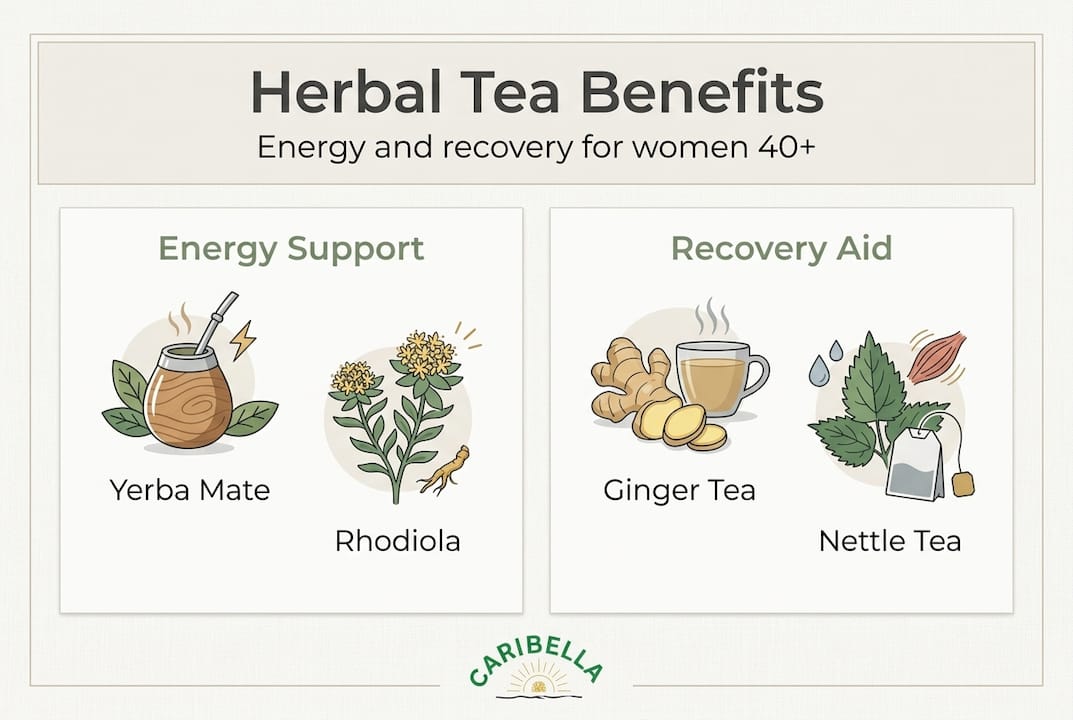
- Adaptogenic support: Herbs like rhodiola rosea help your body adapt to physical and hormonal stress, rather than simply masking fatigue with stimulants.
- Anti-inflammatory action: Many herbal teas contain polyphenols and flavonoids that reduce exercise-induced inflammation, supporting faster recovery without pharmaceutical intervention.
- Hormonal compatibility: Unlike synthetic supplements, most herbal teas carry a low risk of interfering with the hormonal shifts common in perimenopause.
- Digestive gentleness: Herbal infusions are easy on the stomach, making them suitable before or after training when digestion may already be under stress.
- Hydration contribution: Unlike capsules or powders, teas contribute to your daily fluid intake, which is particularly important for women whose hydration needs shift during hormonal transitions.
The evidence backs this up in meaningful ways. Yerba mate boosts fat-burning by 13 to 27% and increases time-trial power in cyclists by 3% when combined with carbohydrates, through the combined action of caffeine, polyphenols, and theobromine. Meanwhile, rhodiola rosea improves muscle fatigue resistance, explosive power, and endurance in women using eccentric training, while simultaneously reducing muscle damage and oxidative stress.
“Herbal teas aren’t a soft option. For women over 40 managing both training demands and hormonal changes, they represent a genuinely intelligent approach to energy and recovery.”
Good muscle recovery habits extend well beyond what you eat immediately after training. Sleep quality, stress management, and hydration all play a role, and herbal teas can support several of these at once. That’s a level of multi-tasking that most single-ingredient supplements simply can’t match.
Top herbal teas for energy and performance
Having explored why herbal teas are exceptional, let’s compare specific types for energy and performance.
Not all herbal teas are equal when it comes to athletic performance. The right choice depends on your caffeine sensitivity, where you are in your hormonal cycle, and what kind of training you’re doing. Here’s a clear comparison to help you decide.
| Tea | Key compounds | Primary benefit | Caffeine level | Best timing |
|---|---|---|---|---|
| Yerba mate | Caffeine, polyphenols, theobromine | Endurance, fat-burning | High (140-160mg) | Pre-workout |
| Rhodiola rosea | Rosavins, salidroside | Fatigue resistance, explosive power | None | Daily, morning |
| Nettle | Iron, magnesium, vitamins | Adrenal support, gentle energy | None | Morning or post-workout |
| Ginger | Gingerols, shogaols | Recovery, soreness reduction | None | Post-workout |
| Green tea | Catechins, EGCG, caffeine | Fat oxidation, endurance | Low to moderate | Pre or during |
Yerba mate is arguably the most impressive performer on this list for active women who aren’t caffeine-sensitive. The 13 to 27% fat-burning boost is significant for women over 40 whose metabolism naturally shifts, making fat loss more challenging. The theobromine content also delivers a smoother, longer-lasting energy than coffee, with less of the sharp crash.
Rhodiola rosea is the standout choice for women dealing with fatigue that goes beyond normal tiredness. Research confirms it reduces oxidative stress and muscle damage in female athletes, which is particularly relevant during perimenopause when recovery times often lengthen. It’s caffeine-free, making it safe for evening use or for those who react badly to stimulants.
Statistic callout: Rhodiola combined with caffeine has been shown to enhance soccer performance, whilst rhodiola alone significantly boosts reactive strength and endurance in women engaging in eccentric training programmes.
Nettle tea is often overlooked in fitness contexts, but it’s remarkably useful for women experiencing adrenal fatigue alongside training load. It’s rich in iron, which supports oxygen transport during exercise, and magnesium, which aids muscle relaxation and sleep quality. For women in perimenopause who experience heavier periods or increased fatigue, nettle is a practical, low-risk daily option.
Pro Tip: If you’re caffeine-sensitive but still want performance support, try alternating rhodiola in the morning with nettle post-workout. This gives you adaptogenic benefits without the hormonal disruption that high caffeine can trigger during perimenopause.
For a deeper look at which blends work best around gym sessions, our guide to herbal gym teas covers timing, combinations, and real-world examples in detail.
Herbal teas for recovery and inflammation
Next, let’s discuss how herbal teas specifically aid recovery and manage inflammation.
Recovery is where many women over 40 feel the greatest frustration. You train hard, but soreness lingers longer than it used to, and energy levels take more time to bounce back. Herbal teas with anti-inflammatory and antioxidant properties can make a measurable difference here.
| Tea | Active compounds | Recovery mechanism | Evidence quality |
|---|---|---|---|
| Ginger | Gingerols, shogaols | Reduces DOMS, lowers inflammation markers | Strong |
| Green tea | EGCG, catechins | Reduces oxidative stress, supports fat oxidation | Moderate |
| Turmeric/curcumin | Curcumin | Lowers creatine kinase, reduces muscle damage | Strong |
| Nettle | Iron, magnesium | Supports oxygen transport, muscle relaxation | Moderate |
Ginger is one of the most studied herbs for exercise recovery. Research published in Runner’s World UK confirms that ginger reduces DOMS and inflammation biomarkers following intense training. When combined with green tea, the effects extend to improved endurance and fat oxidation, which is a particularly useful finding for women training outdoors in colder UK conditions. Ginger also improves thermal comfort during cold-weather exercise, meaning you can sustain output for longer.
Green tea has a more complex picture. Studies show that catechins in green tea can reduce oxidative stress and muscle damage, though results vary between individuals. The evidence is more consistent for fat oxidation and endurance support than for direct soreness reduction. For women who train regularly and want a low-caffeine daily option that also supports body composition, green tea is a sensible addition to the routine.
- Drink ginger tea within 30 minutes of finishing your workout for the best anti-inflammatory effect.
- Combine ginger with green tea for cold-weather training days to benefit from improved thermal sensation.
- Use turmeric tea or golden milk on heavy training days when muscle damage is likely to be higher.
- Allow 2 to 4 weeks of consistent use before judging whether an herbal tea is working for recovery.
- Keep a simple training diary noting soreness levels, so you can track changes objectively.
“Recovery isn’t passive. The compounds in ginger and curcumin actively interrupt inflammation pathways that slow tissue repair, meaning your next session starts from a better baseline.”
Understanding the broader picture of herbal tea benefits beyond just recovery helps you make smarter choices across your whole wellness routine. And if you’re also navigating hormonal shifts, our dedicated resource on menopause herbal teas addresses the intersection of recovery, energy, and hormonal health with evidence-specific guidance.
Timing matters enormously. Drinking recovery teas in the two-hour window after training, when your muscles are most receptive to repair signals, gives you the best chance of measurable benefit. Pairing tea intake with light protein and good muscle recovery strategies compounds the effect.
Personalising herbal tea routines for energy, menopause, and recovery
Now we’ve seen the science, let’s look at practical, personalised routines for real women.
Generic advice about drinking more green tea doesn’t cut it when you’re balancing training schedules, hormonal fluctuations, work, and everything else that life at 40-plus involves. A personalised approach, built around your specific training intensity, caffeine tolerance, and hormonal stage, is where results actually come from.
Here’s a step-by-step approach to building your own routine:
- Assess your caffeine tolerance. If coffee causes anxiety, palpitations, or disrupted sleep, avoid yerba mate and stick with caffeine-free options like rhodiola, nettle, and ginger. If you handle caffeine well, yerba mate pre-workout is a strong choice.
- Identify your primary goal. Energy and endurance before training? Yerba mate or green tea. Recovery and soreness after? Ginger or turmeric. Hormonal fatigue and adrenal support? Rhodiola and nettle.
- Match tea timing to training. Caffeinated teas work best 30 to 60 minutes before exercise. Recovery teas are most effective within two hours after finishing.
- Account for your hormonal cycle. During the luteal phase, when oestrogen drops and fatigue increases, lean towards adaptogens like rhodiola rather than stimulants. During higher-energy phases, yerba mate may feel better tolerated.
- Introduce one tea at a time. Adding multiple new herbs simultaneously makes it impossible to identify what’s helping and what isn’t. Give each new addition two to three weeks before evaluating.
- Track and adjust. Note energy levels, soreness, sleep quality, and mood. Adjust amounts and timing based on what you observe, not what you assume should happen.
Curcumin from turmeric measurably reduces creatine kinase levels (a key marker of muscle damage) and lowers inflammation markers in athletes. For women who train hard two or more times per week, incorporating turmeric tea or golden milk on heavy training days is one of the most evidence-backed additions you can make.
For women navigating perimenopause specifically, vitex (also known as chaste tree) may support progesterone balance, whilst nettle provides iron and minerals to counteract fatigue caused by hormonal shifts. Always consult your GP before adding hormone-influencing herbs, particularly if you’re on HRT or other medications.
Pro Tip: Keep a small flask of warm ginger and lemon tea in your gym bag. Drinking it immediately post-workout, before you even leave the changing room, means you’re hitting the anti-inflammatory window consistently without relying on memory at home.
For guidance on which herbs are considered safe during menopause transition, our resource on safe herbal remedies for menopause provides evidence-grounded information alongside practical safety checks you should run before starting any new herbal protocol.
Ginger under 5 grams per day is considered low risk by nutritional researchers, making it one of the safest daily additions for active women. Yerba mate at standard servings delivers 140 to 160mg of caffeine, roughly equivalent to a strong coffee, so treat it with the same respect you’d give your morning cup.
What most fitness guides miss about herbal teas for women 40+
Having explored practical routines, here’s what most guides overlook about herbal teas and women’s fitness.
Most articles about herbal teas for fitness treat every woman the same. They list benefits, cite a few studies, and leave you to figure out the rest. What they consistently fail to address is that hormonal context changes everything. A tea that works brilliantly for a 28-year-old athlete may deliver entirely different results for a woman in perimenopause whose cortisol patterns, oestrogen levels, and recovery speed have all shifted.
There are no direct NHS or British Heart Foundation endorsements for specific herbal teas in sports performance, which means the reliable evidence sits in peer-reviewed publications from journals like Springer and Frontiers, alongside established outlets such as Runner’s World UK and Today’s Dietitian. This matters because it shifts the responsibility to you, as the consumer, to seek out credible sources rather than trusting label claims.
Generic one-size-fits-all advice also ignores the reality that hormone-adaptive dosing is necessary. What you drink, when you drink it, and how much you use should shift across your monthly cycle and across the years of perimenopause. Our guide to herbal teas for recovery takes this personalised lens seriously, because we know that real results depend on context, not just compound lists.
Explore herbal teas and wellness solutions
To continue your wellness journey, explore tailored herbal products and support at Caribella.
At Caribella, we’ve built our herbal tea collection around exactly the kind of evidence discussed in this guide. Every blend in our full herbal tea range is selected with active women in mind, drawing on Caribbean plant traditions and backed by an understanding of what women over 40 actually need from their wellness routine.
Whether you’re looking for a pre-workout energy lift, a post-session recovery blend, or daily hormone support, you’ll find options formulated with care and clarity. For women who want to extend their routine beyond teas, our hormone balancing capsules complement herbal tea habits with additional targeted support for the hormonal changes that affect energy, mood, and recovery during perimenopause and beyond. Real wellness is built from consistent, evidence-informed choices, and we’re here to make that straightforward.
Frequently asked questions
Which herbal teas are best for post-exercise recovery?
Ginger and green tea blends are backed by research for reducing soreness and inflammation markers, whilst curcumin reduces muscle damage markers and turmeric tea is one of the most practical ways to consume it. A warm ginger and green tea combination within 30 minutes of finishing exercise is a strong starting point.
Are herbal teas effective for boosting athletic endurance?
Yes, with the right choices. Yerba mate boosts endurance through caffeine, polyphenols, and theobromine, whilst rhodiola improves fatigue resistance and explosive power in female athletes without caffeine.
Is it safe to use herbal teas for energy during menopause?
Most herbal teas carry low risk within recommended amounts. Nettle and adaptogens like rhodiola are particularly suitable for hormonal fatigue, though you should always discuss any new herbal routine with your GP, especially if you’re on HRT. Peer-reviewed guidance, including from Springer’s sports science publications, supports cautious, evidence-led use.
How much caffeine is in yerba mate, and is it suitable for women over 40?
Yerba mate contains 140 to 160mg caffeine per standard serving, comparable to a strong coffee. Women who are caffeine-sensitive, particularly during perimenopause, should choose caffeine-free alternatives like rhodiola or nettle instead.
Should herbal teas be avoided before strenuous activity?
Not at all, but the choice matters. Ginger tea before cold-weather training improves thermal comfort and endurance, whilst yerba mate suits those who tolerate caffeine well. Women sensitive to stimulants should select nettle or ginger pre-workout rather than high-caffeine options.