

Reaching for another coffee when your energy crashes mid-afternoon feels automatic. But for women navigating perimenopause and menopause, caffeine often makes things worse, amplifying anxiety, disrupting sleep, and leaving you more depleted by evening. The truth is, your body is going through profound hormonal shifts, and those shifts need nourishment, not a jolt. Herbal teas, trusted across generations and increasingly supported by research, offer a gentler path. In this guide, we cover why energy dips happen, which herbs genuinely help, how to use them safely, and how to build a daily ritual that works alongside your changing body.
Table of Contents
- Why does energy fluctuate during perimenopause and menopause?
- How do herbal teas support energy naturally?
- Popular herbal teas for energy: benefits, evidence, and best uses
- Are herbal teas safe and effective? Expert views and practical guidance
- Our take: what most menopause guides miss about herbal energy support
- Find your herbal energy solution with Caribella
- Frequently asked questions
Key Takeaways
| Point | Details |
|---|---|
| Multiple herbal teas support energy | Nettle, sage, schizandra, ginseng, and green tea offer different benefits that can help manage fatigue in perimenopause and menopause. |
| Evidence is promising but limited | Small studies support herbal teas for energy and symptom relief, but talk to your GP before starting. |
| Safety depends on quality and dosage | Choose regulated herbal blends and be aware of interactions with medicines or other supplements. |
| Daily rituals beat quick fixes | Consistent use of herbal teas within a healthy lifestyle is more effective than searching for an instant energy boost. |
Why does energy fluctuate during perimenopause and menopause?
If you feel persistently tired despite sleeping, you are not imagining it. The fatigue that comes with perimenopause and menopause is real, and it has several interconnected causes.
Oestrogen does far more than regulate your cycle. It influences serotonin, dopamine, and cortisol, all of which affect how energised and mentally sharp you feel. As oestrogen declines, so does the hormonal scaffolding that supports your mood and stamina. Many women also experience heavier periods during perimenopause, which depletes iron stores. Low iron means your blood carries less oxygen to your muscles and brain, leaving you foggy and fatigued long before you hit the classic menopause stage.
Sleep is another hidden drain. Hot flushes and night sweats interrupt deep, restorative rest, often several times a night. Over weeks and months, this accumulates into a chronic sleep debt that no amount of willpower can overcome. Add to this the adrenal glands working overtime to compensate for declining ovarian hormones, and you have a system that is genuinely under strain.
The most common energy-related symptoms women describe include:
- Persistent tiredness that does not lift after rest
- Brain fog and difficulty concentrating
- Low mood or irritability that saps motivation
- Physical heaviness, particularly in the afternoon
- Disrupted sleep from night sweats or hot flushes
Nutritional status matters enormously here. Magnesium, B vitamins, and iron are all frequently low in women during this life stage, and each one is critical for cellular energy production. Supporting your adrenals and replenishing these nutrients is not a luxury; it is a physiological need.
“Eating a healthy, balanced diet and exercising regularly can help improve some menopause symptoms.” NHS guidance on menopause
Pro Tip: Small, consistent lifestyle changes compound over time. Prioritise sleep hygiene, gentle movement, and nutrient-dense food alongside any herbal support. These are the foundations that herbal tea benefits for women can build upon effectively.
How do herbal teas support energy naturally?
Herbal teas are not magic. But they are genuinely functional. Each herb brings a distinct set of compounds that interact with your hormones, nervous system, or nutritional status in ways that can meaningfully shift how you feel over time.
Here is how the most relevant herbs work:
- Nettle: Rich in iron, magnesium, and calcium. Nettle tea provides minerals and helps replenish the micronutrients depleted by heavy periods and hormonal stress, directly addressing one of the most common causes of midlife fatigue.
- Schizandra berry: A celebrated adaptogen. Schizandra berry supports the body’s ability to manage stress and fatigue while enhancing mental clarity, making it particularly useful when brain fog is your main complaint.
- Sage: Beyond its culinary role, sage supports cognitive function and helps manage hot flushes, which in turn protects sleep and daytime energy.
- Ginseng: A non-caffeinated energiser with a long history in traditional medicine. It supports adrenal resilience and can reduce the frequency of hot flushes.
- Green tea: Provides a mild, stable caffeine release alongside L-theanine, which smooths out the energy curve without the spike and crash of coffee.
| Herb | Main action | Best for |
|---|---|---|
| Nettle | Iron and mineral replenishment | Low iron, post-period fatigue |
| Schizandra | Adaptogenic, clarity | Brain fog, stress-related tiredness |
| Sage | Hormone support, flush relief | Hot flushes disrupting sleep |
| Ginseng | Adrenal support, energy | Caffeine-free boost |
| Green tea | Mild caffeine, antioxidants | Gentle morning lift |
The evidence on herbal teas for menopause suggests these herbs work best when layered rather than relied upon individually. Think of it less like a single supplement and more like a nutritional ecosystem you are building day by day.
Pro Tip: Try green tea or ginseng in the morning for a gentle lift, nettle mid-morning to support mineral levels, and sage tea in the evening to ease flushes and support restful sleep. Explore women’s energy tea blends designed with this layering approach in mind.
Popular herbal teas for energy: benefits, evidence, and best uses
Knowing which tea to reach for depends on understanding your own primary symptom. Here is a practical breakdown of the most evidence-supported options.
Nettle tea is one of the most nutrient-dense herbal options available. It supports adrenals and iron, directly addressing the mineral depletion that drives midlife fatigue. If your tiredness worsens in the week after your period, nettle should be your first port of call.
Sage tea has some of the strongest clinical backing for menopause symptoms. Sage reduces hot flushes by 64% in some studies, which directly improves sleep quality and, by extension, daytime energy levels. Fewer night sweats means more restorative sleep.

Ginseng is well regarded for gentle, sustained energy without caffeine dependency. It is particularly useful for women who have already cut back on coffee but still need support through long afternoons.
Black cohosh is worth mentioning, though with a caveat. Black cohosh has mixed evidence for fatigue reduction, and it is important to consult your GP before using it, especially if you have a history of liver conditions.
Key benefits at a glance:
- Nettle: mineral replenishment, iron support, reduced physical fatigue
- Sage: hot flush reduction, better sleep, improved daytime alertness
- Ginseng: caffeine-free energy lift, adrenal support
- Schizandra: brain fog relief, mental stamina
- Green tea: smooth, mild energy with antioxidant protection
| Tea | Energy | Brain fog | Hot flushes | Sleep support |
|---|---|---|---|---|
| Nettle | High | Medium | Low | Low |
| Sage | Medium | Medium | High | High |
| Ginseng | High | Medium | Medium | Low |
| Schizandra | Medium | High | Low | Medium |
| Green tea | Medium | Low | Low | Low |
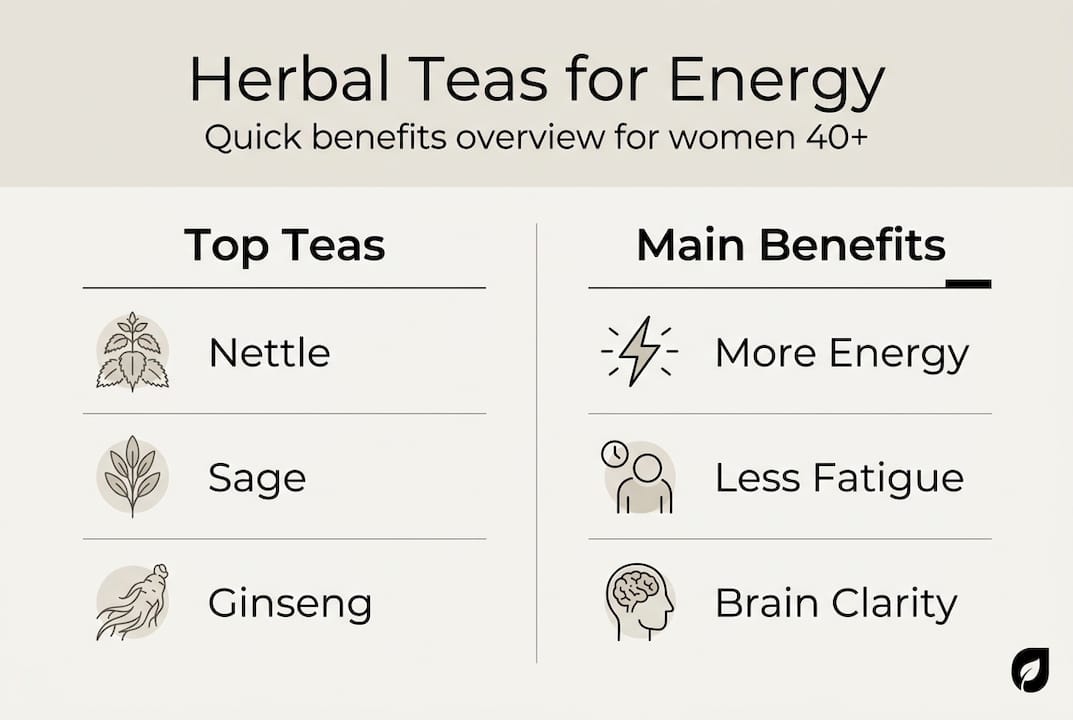
Always check interactions before adding a new herb to your routine. Ginseng can affect blood pressure medications, and sage is best approached cautiously if you are on HRT. For a full overview, see our guide to top menopause teas and browse our herbal teas collection.
Are herbal teas safe and effective? Expert views and practical guidance
Herbal teas occupy an interesting space. They are not medicines, but they are not inert either. Understanding this distinction helps you use them wisely.
The evidence base varies considerably. Sage has some of the most robust data for hot flush reduction. Empirical evidence is limited for direct energy improvement, and large clinical trials specifically on herbal teas and menopause fatigue are still lacking. This does not mean they do not work; it means the research has not yet caught up with centuries of traditional use.
One important distinction is between teas carrying the Traditional Herbal Registration (THR) mark and those that do not. THR-marked products have been assessed for safety and quality by the Medicines and Healthcare products Regulatory Agency. Unregulated teas may vary significantly in potency and purity.
“The NHS recommends focusing on rest, nutrition, and movement, and cautions against unregulated supplements.” NHS menopause advice
Situations to approach with extra caution:
- You are taking prescription medication, particularly for blood pressure, thyroid, or anticoagulation
- You are currently using HRT
- You have a history of oestrogen-sensitive conditions
- You are pregnant or breastfeeding
- You are using multiple herbal products simultaneously
Herbal teas work best as part of a broader approach. Pairing them with regular gentle exercise, a diet rich in whole foods, and consistent sleep habits gives the herbs the right environment to support you effectively. For deeper reading, our evidence-based menopause tea guide covers the research in plain terms.
Pro Tip: Look for the THR symbol on packaging before purchasing any herbal blend. If you are on any regular medication, a quick conversation with your GP or pharmacist is always worth it.
Our take: what most menopause guides miss about herbal energy support
Most guides focus on listing herbs and their benefits. What they rarely address is the expectation gap. Women often try a herbal tea for a week, notice little change, and conclude it does not work. The reality is that herbal teas offer cumulative, gentle support rather than instant fixes. They work best when used consistently over several weeks, alongside healthy habits.
There is also a ritual element that rarely gets mentioned. Taking five minutes to brew and drink a cup of something intentional, something chosen for your body’s specific needs, is itself a form of self-care that reduces cortisol and supports nervous system regulation. This is not a minor thing.
UK experts are right to urge caution around unregulated products and to emphasise lifestyle first. But this does not mean herbal teas should be dismissed. Used wisely, they bridge the gap between lifestyle changes and more intensive interventions, offering in-depth menopause tea insights that empower rather than overwhelm. The goal is not to replace your GP’s advice. It is to support your body every single day with tools rooted in both tradition and emerging science.
Find your herbal energy solution with Caribella
You now understand which herbs can support your energy, how they work, and how to use them safely. The next step is finding blends that are genuinely formulated with women over 40 in mind.

At Caribella, our herbal teas draw on Caribbean botanical traditions alongside modern nutritional thinking. Each blend is carefully selected to support energy, hormonal balance, and overall wellbeing without unnecessary additives. Whether you are starting with a gentle daily brew or building a more targeted routine, you can explore herbal teas across our full collection. For something specifically crafted for women’s energy needs, our women’s wellness tea is a natural place to begin.
Frequently asked questions
Which herbal tea is best for energy during menopause?
Nettle, sage, ginseng, and schizandra are the best-researched herbs for supporting energy and reducing fatigue during menopause, each addressing a different root cause.
Are herbal teas safe to drink daily during perimenopause?
Most well-regulated blends are safe for daily use, but the NHS advises caution with unregulated herbal remedies and recommends checking with your GP if you are on medication or HRT.
Can herbal tea replace caffeine for fatigue?
Herbal teas work differently from caffeine; adaptogens and mineral-rich herbs build resilience gradually, while green tea provides mild caffeine and antioxidants for a gentler lift than coffee.
Are there any side effects from herbal teas for energy?
Ginseng and excess sage can interact with medications or cause issues in high doses, so always follow dosage guidance and check suitability before use.
Recommended
- Herbal tea benefits: a guide for women over 40 – Caribella
- Herbal teas for menopause: evidence and top options – Caribella
- Women’s Wellness Tea | Hormone Balance, Menopause & Cycle Support | Caribella
- Irish moss explained: benefits and risks for women over 40 – Caribella
- 10 бързи съвета за женска енергия и хормонален баланс – Vitaminsflow