

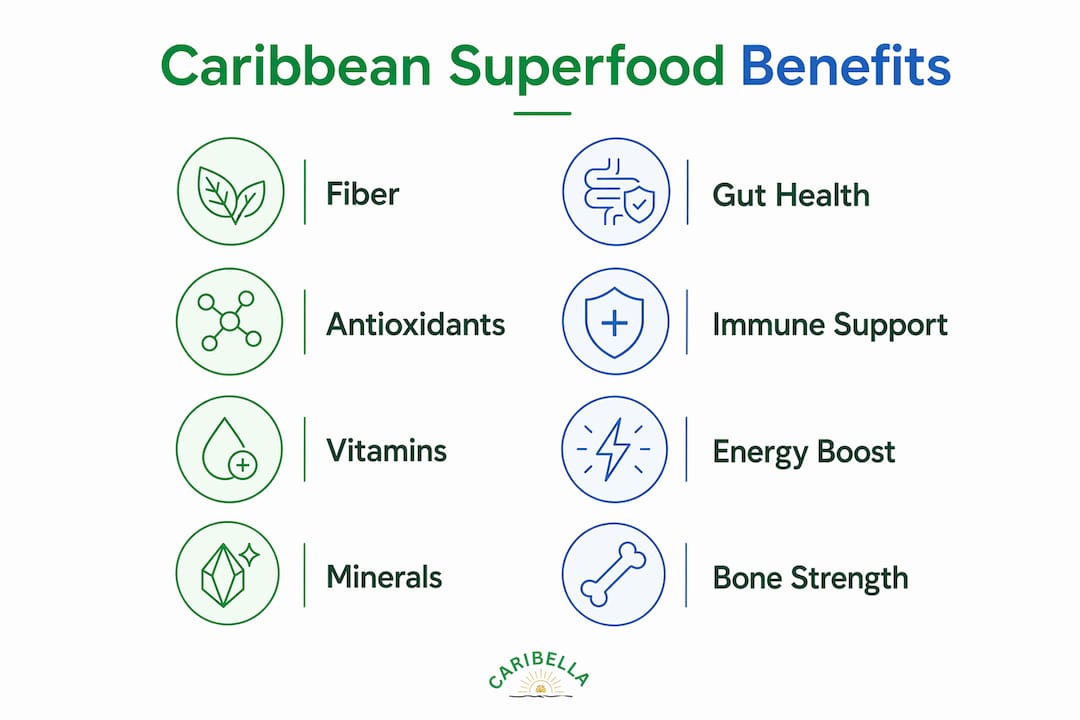
A Caribbean superfood is a nutrient-dense food native to or traditionally consumed in the Caribbean region, associated with measurable health benefits through its fibre, vitamins, minerals, and antioxidant content. The term itself is non-regulated, meaning any food can carry it without meeting a defined nutritional standard. What it describes in practice is a group of whole foods and plant-based ingredients, including sea moss, breadfruit, and ackee, that Caribbean communities have eaten for generations and that modern nutrition science is beginning to examine more closely. These foods are now reaching health-conscious consumers worldwide in forms ranging from fresh produce to gels, capsules, and herbal teas.
What is a Caribbean superfood and which foods qualify?
Caribbean superfoods are best understood as a spectrum. At one end sit whole traditional foods eaten daily across the islands. At the other end sit processed supplements derived from those same ingredients. The nutritional value and safety profile differ considerably depending on where a product sits on that spectrum.
The most recognised examples include:
- Sea moss (red algae, genus Chondrus or Gracilaria): provides fibre, zinc, iodine, and antioxidants; supports gut and immune health
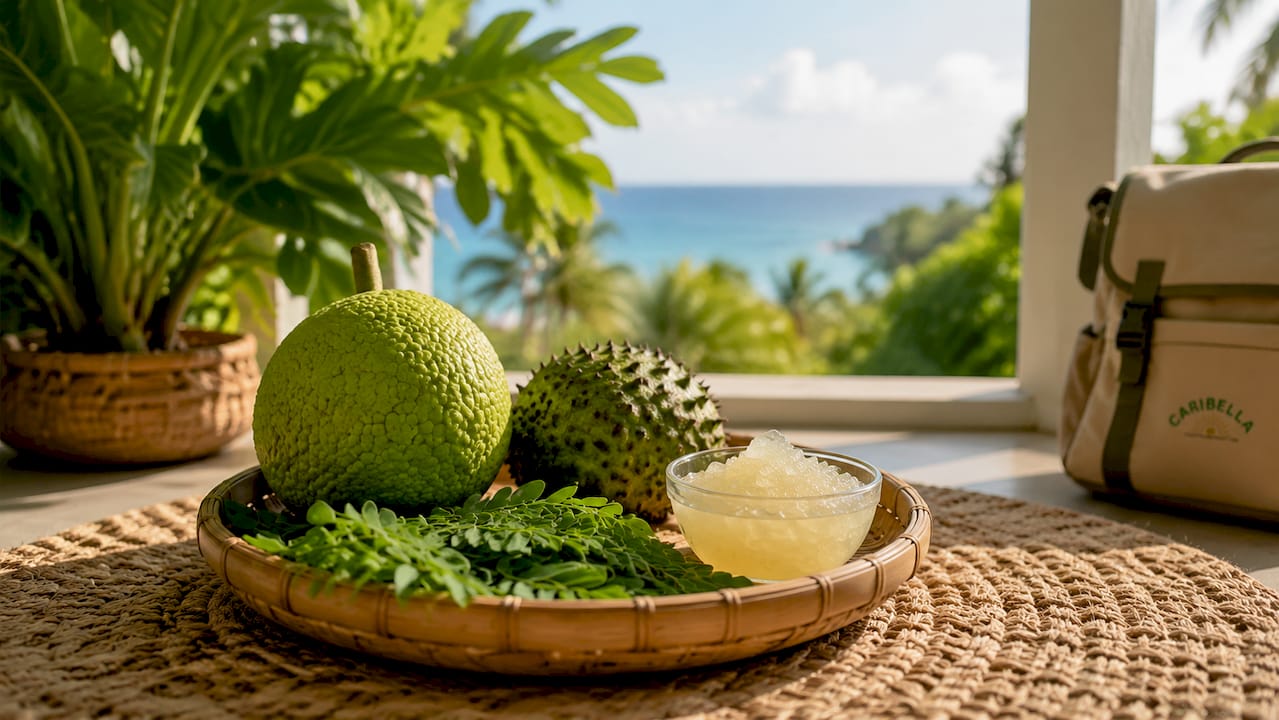
- Breadfruit: a starchy, protein-rich fruit offering potassium, complex carbohydrates, and fibre; supports digestion and heart health
- Ackee: Jamaica’s national fruit, rich in vitamins A and C, healthy fatty acids, and zinc
- Soursop: high in vitamin C and B vitamins; traditionally used to support immunity and digestion
- Moringa: one of the most nutrient-dense leafy plants available, containing calcium, iron, and all essential amino acids
- Callaloo: a leafy green similar to spinach, rich in iron, calcium, and folate
- Papaya: delivers vitamin C, vitamin A, and the digestive enzyme papain
- Guava: exceptionally high in vitamin C, with more per gram than most citrus fruits
- Plantains: a dietary staple across the Caribbean providing potassium, magnesium, and resistant starch that feeds beneficial gut bacteria
- Turmeric: used in Caribbean cooking for its curcumin content, which has well-documented anti-inflammatory properties
Caribbean foods like breadfruit, soursop, and moringa provide fibre, antioxidants, vitamins, and minerals that collectively support digestion, immunity, heart health, and skin. That breadth of benefit is what separates this food group from single-nutrient supplements.
| Food | Key nutrients | Primary health benefit |
|---|---|---|
| Sea moss | Fibre, zinc, iodine, antioxidants | Gut health, immune support |
| Breadfruit | Potassium, fibre, complex carbs | Heart health, sustained energy |
| Moringa | Calcium, iron, all amino acids | Bone strength, anti-inflammatory |
| Soursop | Vitamin C, B vitamins | Immunity, digestion |
| Callaloo | Iron, folate, calcium | Blood health, bone support |
| Guava | Vitamin C, fibre, lycopene | Skin health, immune defence |
Pro Tip: When buying Caribbean superfoods in supplement form, check whether the product specifies the species or variety. “Sea moss” covers multiple red algae species with different nutrient profiles, so a product that names the species is more transparent and trustworthy.
How is sea moss used traditionally and in modern wellness?
Sea moss holds a distinct place among Caribbean dietary staples because it bridges traditional food culture and the modern supplement market more visibly than any other ingredient in this group. Sea moss grows in Caribbean waters and has been used for centuries as a food ingredient, a thickening agent in drinks, and a home remedy for respiratory and digestive complaints.
Today it is sold in four main forms:
- Culinary gel: blended soaked sea moss, used in smoothies, porridge, soups, and sauces
- Capsules and tablets: concentrated dried sea moss in supplement doses
- Powders: dried and ground sea moss, often blended into protein powders or wellness drinks
- Gummies: sea moss extract in a chewable supplement format
The nutritional contribution of sea moss comes primarily from its fibre and micronutrients supporting gut and immune health. Registered dietitians are clear that these nutrients are real and useful, but they also exist in other common foods. Sea moss is not nutritionally unique. It is a convenient and culturally meaningful way to add micronutrients to a diet that may already be short on them.
The safety picture changes significantly with powdered supplements. One study found cadmium and lead exceeding California safety limits in powdered sea moss capsules. Concentration of dried plant material amplifies whatever contaminants were present in the growing environment, and sea moss absorbs minerals from the water around it, including heavy metals.
Pro Tip: Choose sea moss gel over powdered capsules where possible. If you prefer capsules, look for products that carry third-party testing certification from organisations such as NSF International or USP. This is the most reliable way to verify that what is on the label matches what is in the product.
The supplement regulation for sea moss products is far less stringent than for pharmaceuticals, which places the burden of quality verification on the consumer. Third-party testing is not a bonus feature. It is a baseline requirement for any sea moss supplement worth buying.
How do Caribbean superfoods compare with global health foods?
The honest comparison between Caribbean superfoods and widely marketed global health foods like spirulina, kale, or açaí reveals more similarity than difference at the nutrient level. What sets Caribbean superfoods apart is their cultural integration, their culinary versatility, and the growing conditions of the Caribbean region, which produce distinct flavour and phytochemical profiles.
Sea moss is a generic term covering multiple red algae species, each with variable nutrient and contaminant profiles. This variability is greater than you find with kale or spinach, where the species is consistent and the growing conditions are well understood. For a detailed breakdown of how sea moss species differ, the sea moss terminology guide from Caribella explains label differences clearly.
| Food | Standout nutrient | Culinary use | Supplement risk |
|---|---|---|---|
| Sea moss | Iodine, zinc | Gel, drinks, soups | Heavy metal contamination in powders |
| Spirulina | Protein, B12 | Powder in smoothies | Generally low with reputable brands |
| Kale | Vitamin K, calcium | Raw, cooked, juiced | Minimal |
| Moringa | Iron, all amino acids | Powder, fresh leaves | Low |
| Breadfruit | Potassium, complex carbs | Roasted, boiled, flour | Not typically sold as supplement |
The blending of tradition and modern commercial aquaculture in the Caribbean sea moss industry, as noted in FAO’s 2025 report, means product consistency varies considerably between suppliers. A sea moss gel made from wild-harvested Caribbean sea moss and one made from pool-farmed sea moss in Asia are not equivalent products, even if they carry the same label.
Pro Tip: When comparing sea moss versus spirulina as supplements, consider your specific nutritional gaps. Spirulina is higher in protein and B12. Sea moss is higher in iodine and offers culinary flexibility that spirulina does not.
How to incorporate Caribbean superfoods into your daily diet
The most effective way to benefit from Caribbean nutrition is to treat these foods as dietary staples rather than occasional supplements. That is how they have always functioned in Caribbean households, and it is the approach that delivers the most consistent nutritional return.
Here are practical ways to start:
- Add sea moss gel to your morning routine. One to two tablespoons stirred into a smoothie, porridge, or juice adds fibre and micronutrients without altering the flavour significantly. You can make sea moss gel at home or buy a ready-made version.
- Swap white rice for breadfruit once a week. Roasted or boiled breadfruit has a lower glycaemic index than white rice and delivers more potassium and fibre per serving. It works well as a side dish with fish, chicken, or legumes.
- Use callaloo or moringa as your leafy green. Both integrate into any recipe that calls for spinach or kale. Moringa powder can be stirred into soups or sauces without cooking.
- Eat plantains as a starch rather than a snack. Boiled green plantains contain resistant starch, which feeds beneficial gut bacteria and supports digestive health more effectively than ripe, fried plantains.
- Brew soursop leaf tea. Soursop leaves are used traditionally across the Caribbean as a calming herbal tea. They are widely available dried and make a straightforward addition to an evening routine.
A few cautions are worth noting:
- Ackee must be fully ripe before eating. Unripe ackee contains hypoglycin A, a toxin that causes serious illness. Tinned ackee sold in the UK is processed at the correct stage of ripeness and is safe.
- Sea moss is high in iodine. People with thyroid conditions should speak to a GP before adding it regularly to their diet.
- Supplements are not a substitute for a varied diet. Sea moss nutrients support health as part of a broader pattern of eating, not as a standalone intervention.
The Caribbean herbs used in traditional cooking, including turmeric, ginger, and bay leaf, add further phytochemical value when used consistently in meals rather than taken as isolated extracts.
Key takeaways
Caribbean superfoods deliver genuine nutritional value as part of a varied diet, but whole-food and gel forms are safer and more reliable than powdered supplements.
| Point | Details |
|---|---|
| Definition matters | “Caribbean superfood” is non-regulated; focus on the nutritional profile, not the label. |
| Whole foods first | Breadfruit, callaloo, plantains, and papaya deliver consistent nutrients without contamination risk. |
| Sea moss form matters | Gel and culinary forms are safer than powdered capsules, which can contain heavy metals. |
| Third-party testing is non-negotiable | For any sea moss supplement, verify NSF International or USP certification before buying. |
| Cultural context adds value | These foods work best as dietary staples, not as occasional supplements bolted onto a poor diet. |
Why I think we are still missing the point about Caribbean superfoods
The conversation around Caribbean superfoods tends to collapse into two camps. One side treats sea moss as a cure for everything from fatigue to hair loss. The other dismisses the entire category as social media hype. Neither position is useful.
What I have observed, working with Caribbean wellness traditions and modern nutrition research, is that the real value of these foods lies in their cumulative, everyday contribution to a diet that is otherwise short on fibre, micronutrients, and plant diversity. Breadfruit eaten twice a week, callaloo in a weekly soup, sea moss gel in a morning smoothie: none of these are dramatic interventions. Together, they shift the nutritional baseline of a diet in a meaningful direction.
The sea moss market specifically concerns me. The quality gap between a well-sourced Caribbean gel and a cheap powdered capsule is enormous, and most consumers have no way of knowing which they are buying. I have seen products labelled “wildcrafted Caribbean sea moss” that contain species farmed in Asia under entirely different conditions. The sea moss myths around purity and sourcing are widespread and worth understanding before you spend money on supplements.
My honest recommendation: start with food. Buy breadfruit from a Caribbean grocer. Cook with callaloo. Try a reputable sea moss gel from a brand that publishes its sourcing and testing. The benefits are real, but they come from consistency and quality, not from the most expensive capsule on the shelf.
— Nicole
Explore Caribella’s Caribbean superfood range
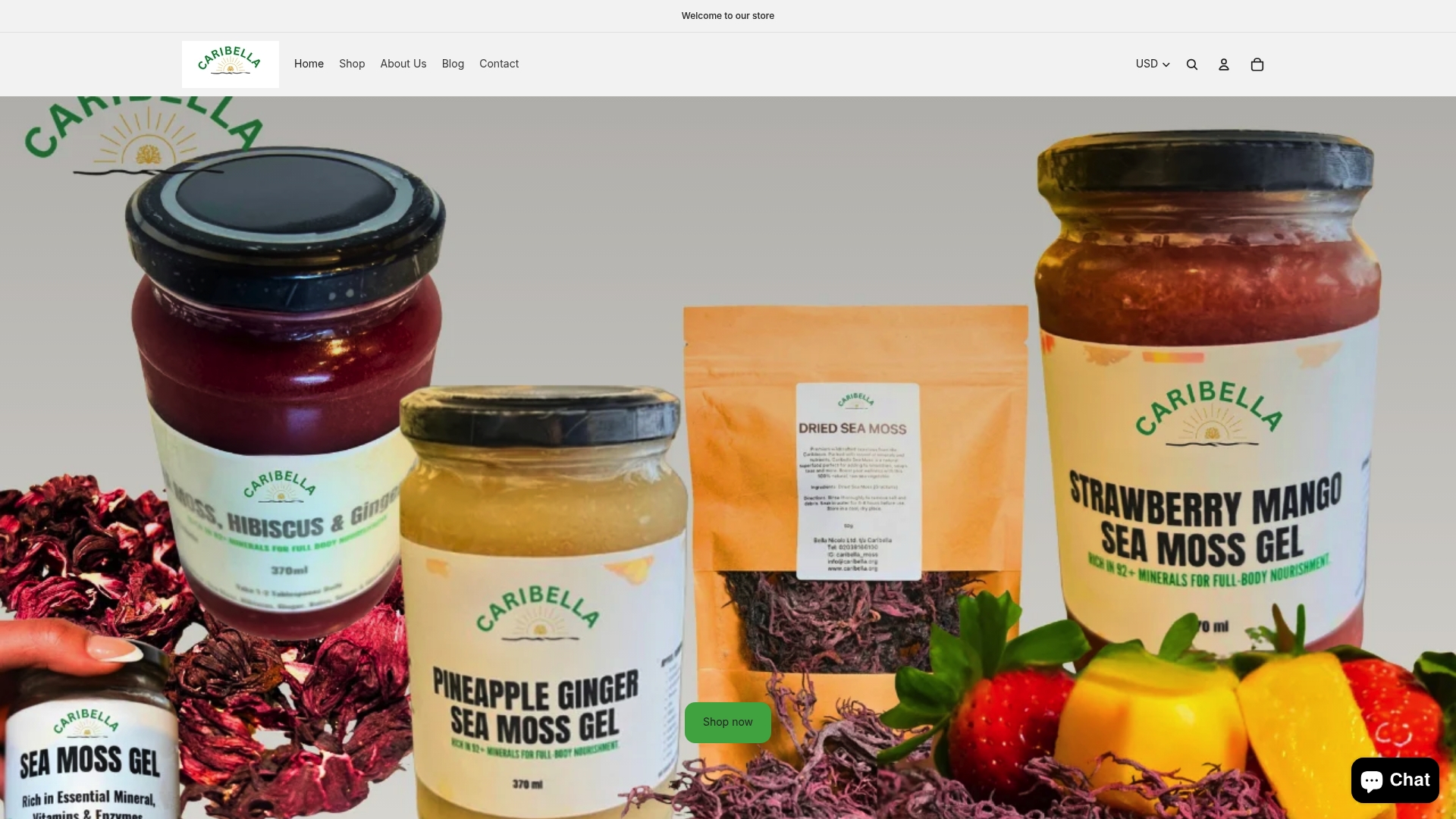
Caribella sources and prepares sea moss gels using carefully selected Caribbean ingredients, with a focus on quality and transparency. If you are ready to move beyond supplements and experience sea moss in its most versatile culinary form, the sea moss gels range offers plain and flavoured varieties that work in smoothies, drinks, and recipes. Each product is made with filtered water and natural ingredients, with no unnecessary additives. Caribella also offers herbal teas inspired by Caribbean botanical traditions, making it straightforward to bring more of these ingredients into your daily routine without overhauling your diet.
FAQ
What is a Caribbean superfood exactly?
A Caribbean superfood is a nutrient-dense food native to or traditionally consumed in the Caribbean, including sea moss, breadfruit, ackee, soursop, and moringa. The term is not regulated, so it describes a cultural and nutritional category rather than a certified standard.
Is sea moss actually good for you?
Sea moss provides fibre, zinc, iodine, and antioxidants that support gut and immune health, but registered dietitians note these nutrients exist in other foods too. It is a useful dietary addition, not a miracle cure.
Which form of sea moss is safest?
Culinary gel and whole-food forms are safer than powdered capsules. One study found heavy metals exceeding safety limits in powdered sea moss supplements, making third-party tested products the minimum standard for anyone choosing capsules.
How do Caribbean superfoods differ from other superfoods?
Caribbean superfoods like breadfruit and callaloo are primarily whole foods with deep culinary traditions, whereas many globally marketed superfoods such as spirulina are sold almost exclusively as supplements. The whole-food context makes Caribbean options easier to integrate into everyday cooking.
Can you eat Caribbean superfoods every day?
Most Caribbean superfoods are safe for daily consumption as part of a varied diet. Sea moss is the exception to watch: its high iodine content means daily use in large amounts may affect thyroid function, particularly for people with existing thyroid conditions.