

Tea is a zero-calorie, antioxidant-rich beverage that actively supports hydration, mood regulation, and long-term health when consumed consistently. The role of teas in daily routine goes well beyond a morning habit. From green tea’s catechins to chamomile’s calming compounds, each cup contributes measurable benefits to your body and mind. Jenifer Bowman, a cardiac dietitian at UCHealth, notes that tea’s flavonoids may relax blood vessels, inhibit blood clots, and improve cholesterol. Whether you favour green, black, white, oolong, or herbal varieties, the science behind daily tea consumption is both broad and compelling.
What role do teas play in your daily routine?
Tea is one of the most studied beverages in nutritional science, and its benefits in daily life are grounded in real biochemistry rather than wellness folklore. The core compounds responsible are polyphenols, a class of plant-based antioxidants that reduce oxidative stress, support immune function, and interact directly with your gut microbiota. This polyphenol-microbiota relationship is now recognised as central to how tea delivers its health effects. A 2026 review confirmed that polyphenols interact with gut bacteria to produce metabolites with amplified antioxidant and anti-inflammatory properties.

Tea also replaces higher-calorie drinks without sacrificing flavour or ritual. UCHealth confirms that tea has no calories, sodium, sugar, or fat, making it a practical swap for sugary drinks while still delivering genuine nutritional value. For anyone managing weight, energy, or cardiovascular health, that combination is difficult to match. The daily tea consumption advantages compound over time, particularly when you choose unsweetened varieties and align your choices with your health goals.
Which types of teas offer different benefits?
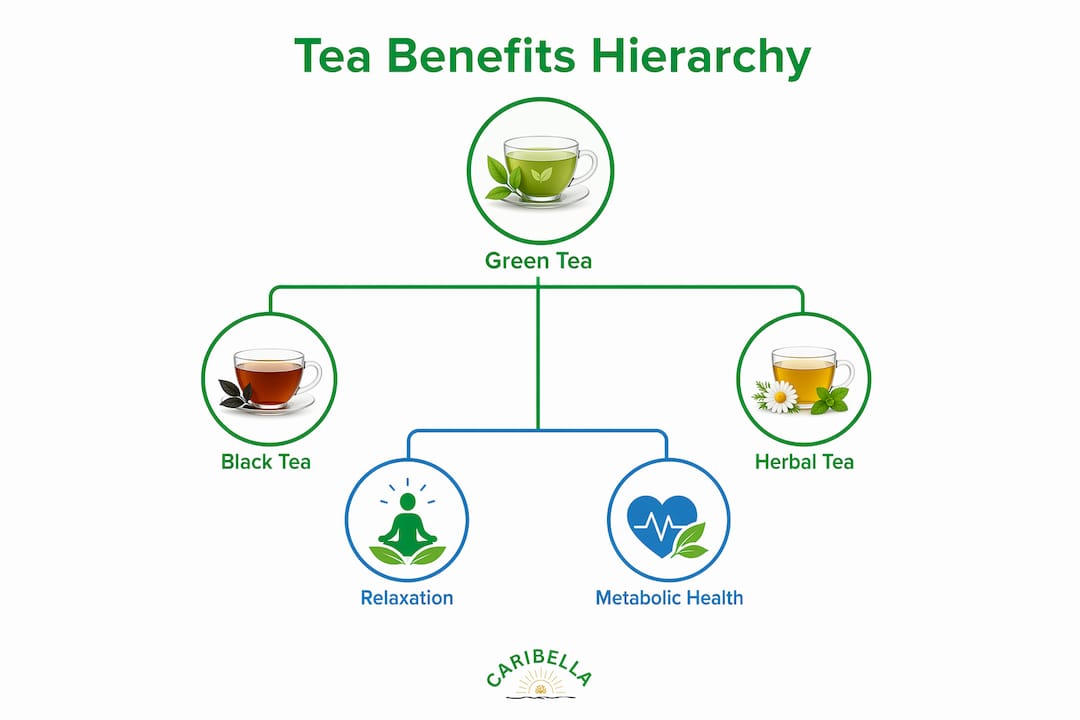
Understanding the distinctions between tea types is the foundation of incorporating tea into routine effectively. Each variety contains a unique profile of compounds that serve different purposes throughout the day.
| Tea type | Key compounds | Primary benefits |
|---|---|---|
| Green tea | Catechins, L-theanine, caffeine | Antioxidant support, metabolism, focused calm |
| Black tea | Theaflavins, caffeine | Fat metabolism, cardiovascular support, alertness |
| White tea | Polyphenols, low caffeine | Anti-inflammatory, delicate flavour, gentle antioxidant |
| Oolong tea | Partial oxidation compounds | Weight management, blood sugar balance |
| Herbal teas | Varies (chamomile, peppermint, lavender) | Digestion, relaxation, sleep quality |
Green tea is the most researched variety, with its high catechin content linked to metabolic and cardiovascular benefits. Black tea’s theaflavins are distinct from green tea’s catechins and have shown specific advantages for fat management and moderate energy without the spike of coffee. White tea sits at the gentler end of the spectrum, with a delicate flavour and lower caffeine content that suits those sensitive to stimulants.
The role of herbal teas in lifestyle is particularly significant for relaxation and digestive support. Chamomile, lavender, and lemon balm are well-documented for promoting calm. Verywell Health notes that herbal teas promote relaxation and improved sleep quality when consumed as part of a bedtime routine, though effects vary depending on the blend and individual health status. For women navigating hormonal changes, herbal teas for wellbeing such as chamomile and lavender offer targeted support beyond general relaxation.
Pro Tip: Always choose unsweetened teas. Adding sugar or flavoured syrups negates many of the metabolic and antioxidant benefits you are seeking from the tea itself.
How does timing your tea intake affect its benefits?
When you drink tea matters as much as which tea you choose. Timing affects caffeine sensitivity, iron absorption, sleep quality, and how effectively your body processes the polyphenols in each cup. Health.com recommends drinking green or black tea in the morning and switching to herbal varieties like chamomile in the evening for the best overall benefits.
A critical but often overlooked consideration is iron absorption. Tea polyphenols bind to non-haem iron in the digestive tract, reducing how much your body absorbs from plant-based foods and supplements. Research confirms that tea inhibits non-haem iron absorption, with the greatest risk for premenopausal women, endurance athletes, and those following plant-based diets. The practical fix is straightforward: leave at least one hour between your tea and any iron-rich meal or supplement.
Here is a suggested daily timing framework:
- Morning (7am to 9am): Green or black tea for gentle caffeine, alertness, and metabolic support. Avoid drinking alongside iron-rich breakfasts such as fortified cereals or spinach.
- Mid-morning (10am to 11am): White or oolong tea for a lighter antioxidant top-up without heavy caffeine.
- Afternoon (2pm to 4pm): Peppermint or ginger herbal tea to support digestion after lunch and maintain focus without disrupting evening sleep.
- Evening (7pm to 9pm): Chamomile, lavender, or lemon balm tea to wind down, reduce cortisol, and prepare for restful sleep.
Tea also works beyond the mug. Using brewed tea in cooking as a marinade base or broth substitute adds antioxidants and depth of flavour to meals without adding calories or sugar. Iced green tea with lemon and ginger is a practical afternoon option that keeps hydration interesting.
Pro Tip: If you take iron supplements, take them first thing in the morning with water, then wait at least an hour before your first cup of tea. This simple adjustment protects your iron status without sacrificing your tea habit.
What are the holistic health impacts of daily tea consumption?
The benefits of tea in daily life extend well beyond hydration. The most significant long-term effects come from tea’s interaction with the gut microbiome, its influence on the gut-brain axis, and its role in reducing chronic inflammation. The polyphenol-microbiota axis is now understood as the primary mechanism through which tea delivers systemic health benefits, meaning the gut bacteria you cultivate through consistent tea drinking amplify the effects of each cup over time.
L-theanine, an amino acid found almost exclusively in tea, works synergistically with caffeine to produce what researchers describe as focused calmness. Unlike caffeine alone, the L-theanine and caffeine combination in green and black tea reduces anxiety while maintaining alertness. This is why tea drinkers rarely report the jitteriness associated with coffee, even at comparable caffeine levels. For anyone managing stress or seeking sustained concentration, this synergy is one of the most practical daily tea consumption advantages available.
On the metabolic side, a recent clinical trial found that tea catechins improved insulin resistance when combined with inulin, though the effect on visceral fat mass was not significant. This finding matters because it sets realistic expectations. Tea supports metabolic health as part of a broader lifestyle, not as a standalone intervention. It complements dietary choices, movement, and sleep rather than replacing them.
Tea’s anti-inflammatory properties also reduce oxidative stress at the cellular level, which is linked to lower risk of cardiovascular disease, type 2 diabetes, and certain cancers. For those already following a health-conscious lifestyle, unsweetened tea is one of the most efficient ways to increase daily antioxidant intake without adding complexity or cost to your routine.
How can you practically integrate teas into your daily lifestyle?
Building a consistent tea habit requires less effort than most people expect, but it does require intention. The most effective approach is to attach tea to existing anchors in your day rather than trying to create entirely new habits from scratch.
- Replace one daily coffee with green or black tea. You retain the caffeine benefit while adding L-theanine and polyphenols that coffee does not provide.
- Keep a kettle and a small selection of teas at your desk or workspace. Accessibility removes the friction that breaks most wellness habits.
- Brew a litre of iced green tea each morning. Store it in the fridge and drink it throughout the day as your primary hydration source.
- Use tea as a cooking ingredient. Steep black tea and use the liquid as a base for sauces, grains, or braised vegetables to add antioxidants to meals effortlessly.
- Pair your evening herbal tea with a deliberate wind-down practice. Combining chamomile or lavender tea with mindfulness techniques amplifies the calming effect of both.
Common pitfalls include drinking tea too close to meals containing iron-rich foods, adding sugar or honey that undermines the metabolic benefits, and relying on bottled or sweetened tea products that bear little resemblance to brewed tea in nutritional terms. How tea enhances daily wellness depends almost entirely on the quality and preparation of what you drink.
Pro Tip: Try adding a slice of fresh ginger and a wedge of lemon to your morning green tea. Ginger supports digestion and the vitamin C in lemon may actually improve iron absorption, partially offsetting any inhibitory effect from the tea polyphenols.
For those who train regularly, herbal teas for energy and recovery offer a targeted way to support performance and reduce post-exercise inflammation without stimulants.
Key takeaways
The most effective daily tea routine combines the right tea type, consumed at the right time, without added sugars, and separated from iron-rich meals to maximise both absorption and antioxidant benefit.
| Point | Details |
|---|---|
| Choose tea by purpose | Green and black teas suit mornings; herbal teas suit evenings and digestion. |
| Protect iron absorption | Leave at least one hour between tea and iron-rich meals or supplements. |
| Gut health is the mechanism | Polyphenols work through gut microbiota, so consistency over time matters most. |
| Avoid added sugars | Sweetened teas negate the metabolic and antioxidant benefits of the polyphenols. |
| Extend tea beyond the cup | Use brewed tea in cooking to add antioxidants and flavour without extra calories. |
What I have learned from building a daily tea routine
I came to tea seriously about four years ago, initially as a way to reduce my coffee intake. What surprised me was how quickly the ritual itself became as valuable as the biochemistry. Swapping my second coffee for a cup of white tea mid-morning genuinely reduced the afternoon energy crash I had accepted as normal for years.
The iron absorption issue caught me off guard. I was drinking green tea with my breakfast, which included a lot of plant-based iron sources, and my energy levels were lower than expected despite an otherwise solid diet. Shifting my morning tea to thirty minutes after breakfast made a noticeable difference within a few weeks. It is the kind of nuance that most general wellness advice skips entirely.
My current favourites are a high-quality loose-leaf green tea in the morning and chamomile with a small piece of fresh ginger in the evening. The evening ritual in particular has become something I genuinely look forward to. It signals the end of the working day in a way that no other habit has managed. The lifestyle improvements from tea habits for better health are rarely dramatic. They are quiet, cumulative, and entirely worth the small effort of getting the details right.
— Nicole
Discover Caribella’s herbal teas for your daily ritual

Caribella’s range of herbal teas is crafted with carefully selected natural ingredients, drawing on Caribbean plant traditions to support relaxation, digestion, immunity, and energy. Each blend is designed to fit naturally into the kind of daily routine this article describes, whether you are looking for a calming evening tea or a functional daytime brew. Alongside the tea collection, Caribella’s sea moss gels complement a tea-based wellness routine by providing additional minerals and nourishment that teas alone do not supply. Explore the full collection at Caribella and find the blends that suit your routine and your goals.
FAQ
What is the best tea to drink in the morning?
Green or black tea is best in the morning, as both provide moderate caffeine alongside L-theanine for sustained alertness without the sharp energy spike of coffee. Drink them at least an hour after any iron-rich food to protect iron absorption.
Can herbal teas help with sleep?
Chamomile, lavender, and lemon balm teas are well-supported for promoting relaxation and improving sleep quality when consumed as part of a consistent evening routine. Effects vary by individual health status and the specific blend used.
How many cups of tea per day is considered beneficial?
Most research points to two to four cups of unsweetened tea per day as a practical range for health benefits, though individual tolerance to caffeine and specific health conditions should guide your personal intake.
Does tea interfere with iron absorption?
Tea polyphenols do inhibit non-haem iron absorption, which is particularly relevant for premenopausal women, endurance athletes, and those on plant-based diets. Separating tea from iron-rich meals and supplements by at least one hour significantly reduces this risk.
Is bottled or ready-to-drink tea as beneficial as brewed tea?
Most bottled and ready-to-drink teas contain added sugars and significantly lower polyphenol concentrations than freshly brewed tea. For the full benefits of tea in daily life, brewed loose-leaf or bagged tea without added sweeteners is the standard to aim for.