

A wellness routine for women aged 40 plus is a structured set of daily habits designed to support hormonal balance, energy, and vitality during perimenopause and menopause. Your body’s needs shift significantly after 40. Oestrogen fluctuates, metabolism slows, and muscle mass begins to decline. The good news is that targeted habits in nutrition, movement, rest, and stress regulation can counter these changes directly. Sources including Stanford Medicine and Happy Aging confirm that consistency, not complexity, is what makes these routines work.
What nutritional habits best support a wellness routine for 40 plus women?
Nutrition is the single most powerful lever you can pull after 40. Hormonal shifts alter how your body processes protein, fat, and carbohydrates, so what worked in your 30s may no longer serve you.
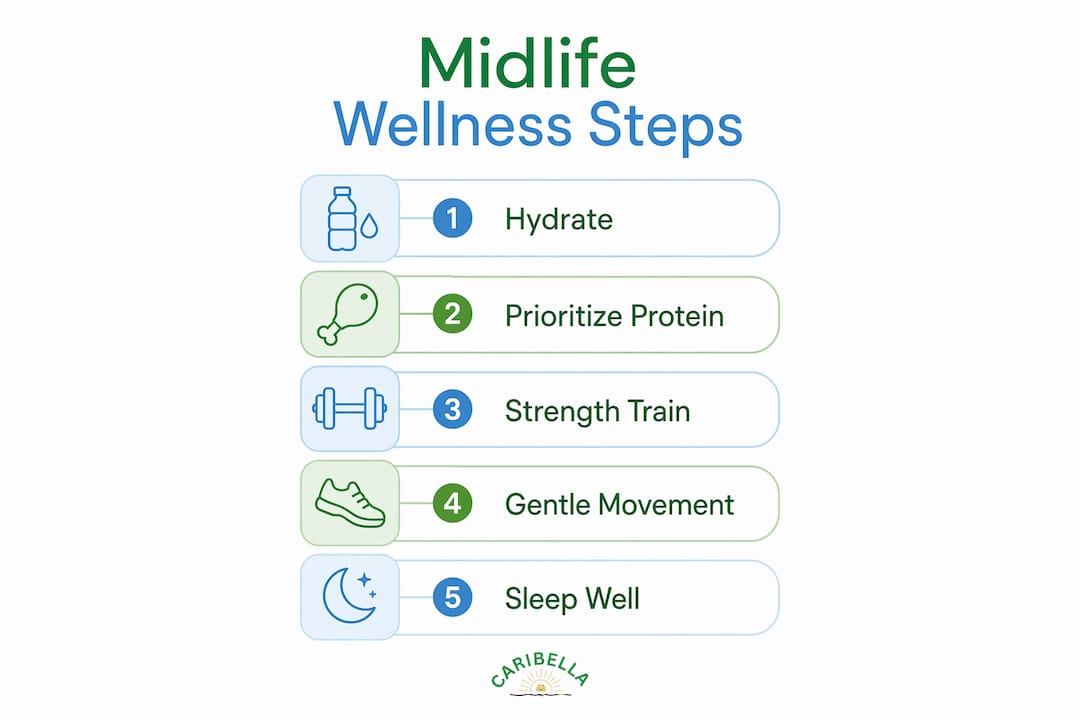
Prioritise protein at every meal
Women over 40 require increased protein of approximately 1.0–1.2 g per kilogram of body weight daily to counteract muscle loss. That translates to roughly 75–90 grams per day, best spread across three meals of 20–30 grams each, plus a protein-rich snack. Muscle is metabolically active tissue. Losing it accelerates weight gain, fatigue, and bone fragility. Prioritising protein is not about aesthetics. It is about preserving the physical foundation of your energy and independence.
Adopt the mediterranean diet as your framework
The Mediterranean diet is the gold standard for midlife nutrition due to its anti-inflammatory properties. It centres on whole plant foods, oily fish, legumes, olive oil, and nuts, all of which support heart and cognitive health. Chronic low-grade inflammation rises after 40 and drives conditions from joint pain to brain fog. A plant-forward eating pattern directly addresses this. You do not need to follow it perfectly. Shifting 70% of your meals in this direction produces measurable benefits.

Fibre and healthy fats for metabolic health
Women in their 40s need 25–31 grams of fibre daily from whole foods to support metabolism and weight management. One cup of cooked broccoli or half a cup of berries provides roughly 5 grams. That means building fibre into every meal, not just adding a supplement. Healthy fats from avocado, walnuts, and oily fish also support oestrogen metabolism and brain function. Pairing fat with fat-soluble nutrients improves absorption significantly.
Recommended foods for women over 40:
- Eggs, Greek yoghurt, and oily fish such as salmon or mackerel for protein
- Lentils, chickpeas, and black beans for fibre and plant protein
- Leafy greens, broccoli, and sweet potato for micronutrients
- Berries, flaxseed, and walnuts for antioxidants and omega-3s
- Olive oil and avocado for anti-inflammatory fats
- CoQ10 supplements, which support mitochondrial energy and are best absorbed in the morning with dietary fat
Pro Tip: Take CoQ10 alongside your breakfast rather than on an empty stomach. Fat-soluble nutrients absorb far more effectively when paired with a meal containing healthy fats such as avocado or olive oil.
How can exercise and movement be optimised for midlife wellness?
The most common fitness mistake women make after 40 is doing too much of the wrong thing. High-intensity exercise without adequate recovery increases cortisol, disrupts sleep, and accelerates fatigue. The goal is not to train harder. It is to train smarter.
Strength training as your foundation
Strength training two to four times per week improves blood sugar control, bone density, fall prevention, and long-term weight maintenance in women over 40. This is not optional. Bone density peaks in your 30s and declines steadily thereafter. Resistance work is the most direct way to slow that decline. You do not need a gym. Bodyweight exercises, resistance bands, and free weights all count. The key is progressive overload: gradually increasing the challenge over time.
Gentle movement for hormone balance
Yoga, Pilates, and daily walking are not lesser alternatives to intense workouts. They are necessary complements that support hormone balance, reduce cortisol, and improve joint mobility. Walking in particular is underrated. A 20-minute walk after a meal improves blood glucose regulation and supports digestion. Yoga and Pilates also strengthen the deep stabilising muscles that protect the spine and pelvis, areas that become vulnerable during hormonal transitions.
Recommended exercise modalities for women over 40:
- Strength training (2–4 sessions per week): Builds muscle, supports bone density, and regulates metabolism
- Walking (daily, 20–30 minutes): Reduces cortisol, improves glucose control, and supports cardiovascular health
- Yoga or Pilates (2–3 sessions per week): Improves flexibility, core strength, and nervous system regulation
- Brief movement bouts (10 minutes, multiple times daily): Triggers BDNF, the brain-derived neurotrophic factor that supports cognition and mood
- Swimming or cycling (1–2 sessions per week): Low-impact cardiovascular conditioning that protects joints
Pro Tip: If you cannot fit a full workout into your day, three separate 10-minute movement sessions deliver comparable cognitive and metabolic benefits to one continuous 30-minute session. Consistency across the week matters far more than session length.
What are the best practices for managing stress and sleep in your 40s?
Stress is not just a mental health concern after 40. It is a direct hormonal disruptor. Elevated cortisol affects fat distribution, blood pressure, sleep quality, and inflammation, all of which are already under pressure during perimenopause.
Regulate your nervous system daily
Nervous system regulation is the foundation of sustainable wellness habits for older adults. Simple techniques such as box breathing, a five-minute body scan, or a digital detox before bed signal safety to your nervous system and lower cortisol. These are not luxuries. They are physiological interventions. Even two minutes of slow, deliberate breathing activates the parasympathetic nervous system and measurably reduces heart rate.
Sleep hygiene that actually works
Rest is a necessity, not a reward. Chronic sleep deprivation disrupts the hormonal balance that already fluctuates during midlife, compounding fatigue, mood instability, and weight gain. A consistent sleep schedule, even at weekends, is the single most effective sleep intervention available. Caffeine consumed after 2pm delays sleep onset by several hours in most adults. Keeping your bedroom cool and dark supports melatonin production, which declines with age.
Tracking sleep with a wearable device such as a Garmin or Oura Ring reveals whether you are getting sufficient deep sleep. Increasing deep sleep from 15 to 45 minutes can significantly improve recovery quality and daytime energy. That is a meaningful target.
Practical stress and sleep strategies:
- Set a consistent bedtime and wake time, including weekends
- Avoid screens for 30–60 minutes before bed
- Keep your bedroom below 18°C for optimal melatonin production
- Practise five minutes of breathwork or journalling before sleep
- Limit caffeine to before midday if you are sensitive to its effects
- Use a wearable device to track deep sleep duration and adjust habits accordingly
Pro Tip: A micro-moment practice takes under two minutes. Sit quietly, place one hand on your chest, and take five slow breaths counting to four on the inhale and six on the exhale. Done twice daily, this lowers baseline cortisol over time.
How to build a simple 30-minute morning wellness routine for women over 40
A 30-minute morning routine built around four pillars delivers the most consistent results for women over 40: hydration, light movement, natural morning light exposure, and a high-protein breakfast. Practised six days a week, this approach outperforms sporadic high-intensity efforts. The goal is a repeatable structure, not a perfect performance.
Sample morning routine with timings:
- Minutes 1–2: Drink 500ml of water immediately upon waking to rehydrate after sleep
- Minutes 3–12: Step outside or sit near a window for natural morning light exposure, which resets your circadian rhythm
- Minutes 13–22: Gentle movement such as a 10-minute walk, yoga flow, or bodyweight exercises
- Minutes 23–30: Prepare and eat a high-protein breakfast with healthy fats; take CoQ10 at this point for optimal absorption
The table below compares a simplified routine against a more elaborate one across the dimensions that matter most.
| Approach | Time Required | Sustainability | Impact on Energy |
|---|---|---|---|
| Simplified 30-minute routine | 30 minutes | High: repeatable daily | Consistent energy and mood stability |
| Elaborate 90-minute routine | 90 minutes | Low: skipped on busy days | Inconsistent; benefits lost when skipped |
| No structured routine | Minimal | Not applicable | Poor energy regulation and reactive mood |
The simplified routine wins on every measure that matters for long-term results. Overcomplicating your morning creates decision fatigue before your day has begun. Start with the four pillars. Add complexity only once the basics are automatic. For further reading on herbal support for women over 40, natural additions such as herbal teas can complement your morning ritual without adding time.
Key takeaways
A consistent, simplified wellness routine built on protein, movement, sleep, and stress regulation is the most effective approach for women over 40 managing midlife hormonal changes.
| Point | Details |
|---|---|
| Protein intake matters most | Aim for 75–90 grams daily across meals to preserve muscle and support metabolism. |
| Strength training is non-negotiable | Two to four sessions per week protects bone density and regulates blood sugar. |
| Sleep is a hormonal tool | A consistent sleep schedule and cool, dark bedroom directly support oestrogen and cortisol balance. |
| Simplicity drives consistency | A 30-minute morning routine practised six days a week outperforms elaborate routines done sporadically. |
| Nervous system regulation is self-care | Daily breathwork and digital detox lower cortisol and support hormonal stability in midlife. |
What i have learned about wellness after 40
The most persistent myth I encounter is that a wellness routine needs to be ambitious to be effective. Women come to midlife carrying decades of diet culture messaging that equates effort with results. The truth I have observed, both personally and through the women I speak with, is the opposite.
The perimenopausal body does not respond well to punishment. Overtraining, under-eating, and chronic stress all raise cortisol, and elevated cortisol is the enemy of every goal you have: sleep, weight, mood, and energy. The women who thrive in their 40s and beyond are not the ones doing the most. They are the ones doing the right things repeatedly.
What changed everything for me was treating rest as a physiological requirement rather than a sign of weakness. Once I stopped rewarding myself with rest and started scheduling it like a training session, my energy stabilised in a way that no supplement or workout had achieved. The social and emotional dimensions of wellness matter too. Loneliness and chronic low-grade stress are as damaging as poor nutrition. Building a routine that includes connection, quiet, and genuine pleasure is not indulgent. It is necessary.
If you are starting from scratch, pick one habit from each pillar and do it for three weeks before adding anything else. Small, consistent actions compound. Dramatic overhauls rarely do.
— Nicole
Support your routine with caribella’s natural wellness products
Building a wellness routine that works for your body after 40 is easier when your nutrition supports you from the inside out. Caribella’s plant-based products are rooted in Caribbean tradition and designed specifically to complement midlife wellness goals.

Caribella’s sea moss gels provide a natural source of minerals and nutrients that support energy, digestion, and immunity, all areas that shift during perimenopause. If you prefer variety, the flavoured sea moss gels make daily supplementation genuinely enjoyable. Caribella’s herbal teas are a simple addition to your morning or evening routine, supporting calm and recovery without caffeine. These are not replacements for the habits in this guide. They are natural complements that make those habits easier to sustain.
FAQ
What is a wellness routine for women over 40?
A wellness routine for women over 40 is a structured set of daily habits covering nutrition, movement, sleep, and stress management to support hormonal balance and vitality during midlife. It prioritises consistency and nervous system regulation over intensity.
How much protein do women over 40 need daily?
Women over 40 need approximately 1.0–1.2 g of protein per kilogram of body weight daily, roughly 75–90 grams, to prevent muscle loss and support metabolism.
How often should women over 40 do strength training?
Strength training two to four times per week is the recommended frequency for women over 40 to maintain bone density, regulate blood sugar, and support long-term weight management.
What is the best morning routine for women over 40?
A 30-minute morning routine built around hydration, natural light exposure, light movement, and a high-protein breakfast is the most effective and sustainable approach for midlife women, practised consistently six days a week.
Can supplements help with midlife fatigue?
CoQ10 supports mitochondrial energy production and is particularly useful for women experiencing midlife fatigue. It is best absorbed in the morning when taken alongside a meal containing healthy fats such as avocado or olive oil.